Chronicles
Sun Quan: The lord of Wu who outlasted rivals but not time
Sun Quan balanced wisdom, power, and patience to rule Eastern Wu - a leader who outlasted rivals in the Three Kingdoms but not time itself.

Rayden C
October 13, 2025 — 7 minutes read
The young ruler in the shadow of chaos
When Sun Quan became leader at eighteen, few thought he would last. He inherited a fractured land, and warlords like Cao Cao and Liu Bei had already made their mark in blood and strategy. Sun Quan’s elder brother, Sun Ce, created their eastern dominion through daring campaigns, but his sudden death in 200 CE left the young state without a leader. Many saw Sun Quan as a placeholder, a youth destined to be swept away by greater men.
But Sun Quan didn’t collapse. Sun Ce thrived on momentum; Sun Quan ruled with patience and restraint. He gathered capable advisors — Zhou Yu, Lu Su, Zhang Zhao — and listened. In a world fueled by impulse, he stood out. He acted only after counsel, never mistaking courage for recklessness.
The Romance of the Three Kingdoms shows him as composed beyond his years, his silence speaking louder than a general’s roar. When urged to surrender to Cao Cao, he replied, “If I yield, who among you will follow me?” This quiet defiance marked Eastern Wu’s shift from a remnant of Sun Ce’s ambition to a power defined by Sun Quan’s careful rule.
The art of alliance and the moment to strike
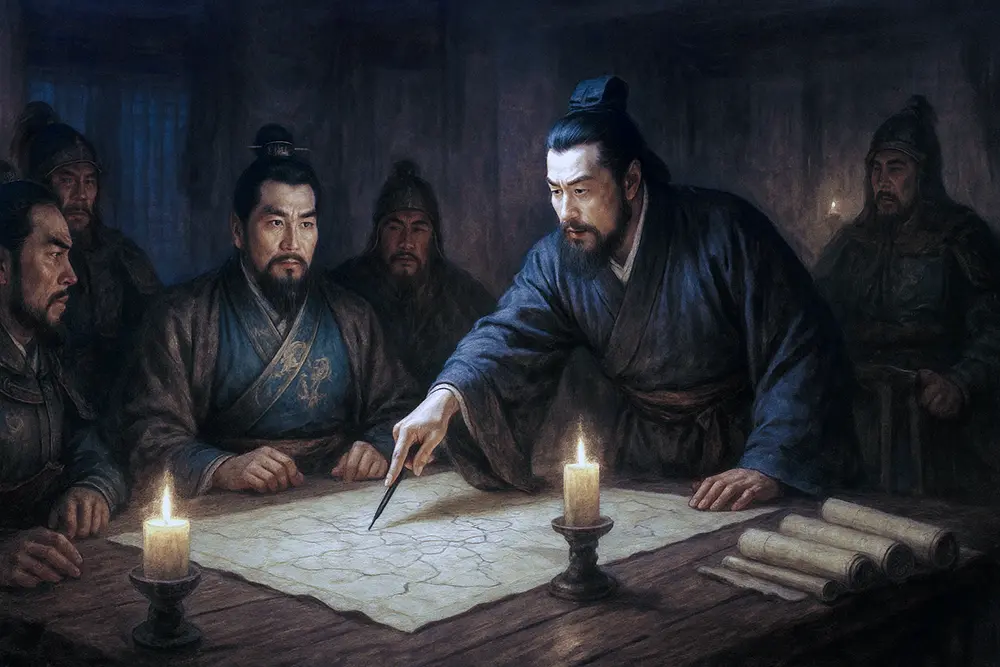
Sun Quan’s genius was not just in military defense, but in timing. He knew when to seize an opportunity and when to let it pass. His alliance with Liu Bei at the Battle of Red Cliffs was a turning point. On paper, it seemed suicidal. Cao Cao commanded hundreds of thousands, while Wu and Shu together had far fewer. Sun Quan saw what others did not: Cao Cao’s reach was bigger than his grasp, and the southern rivers favored locals.
He trusted Zhou Yu’s brilliance, yes, but more importantly, he trusted his own reading of men and momentum. The alliance wasn’t born of desperation but calculation. Sun Quan saw in Liu Bei a useful counterweight, a partner who shared his enemy but not his borders. Together, they shattered Cao Cao’s northern ambitions in the flames of Red Cliffs.
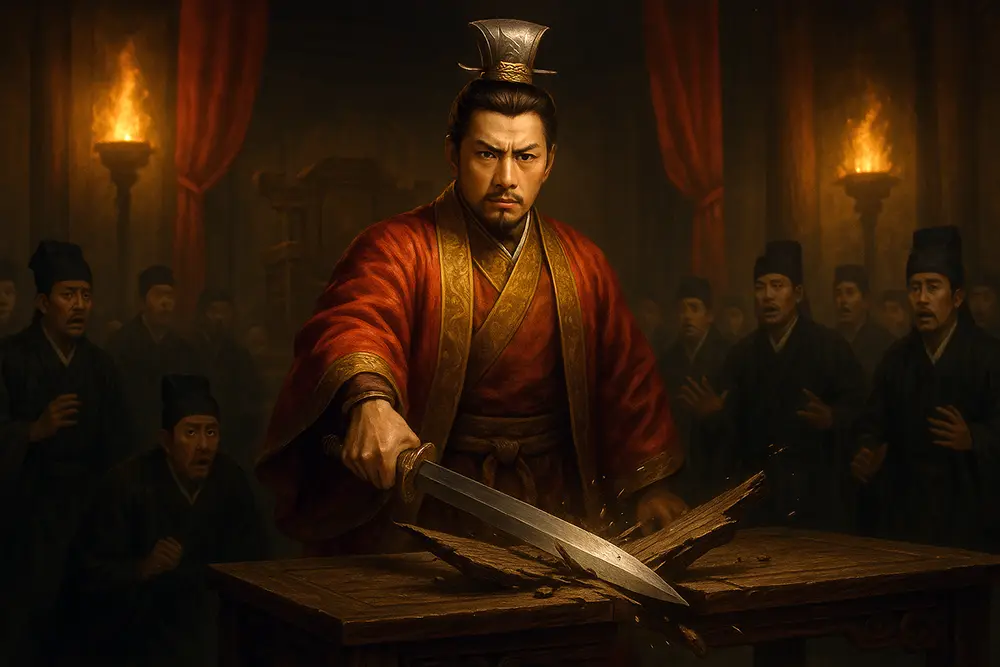
The novel focuses much on Zhou Yu’s role, and rightly so, but it is easy to overlook that his strategies depended on Sun Quan’s choice. The act of cutting his desk in half with a sword to show he preferred death over surrender became a symbol of his resolve. Without this decision, there might have been no Three Kingdoms, just one Wei empire under Cao Cao.
Yet Sun Quan’s diplomacy didn’t end with victory. When the smoke cleared, alliances turned to rivalries. His relationship with Liu Bei soured over control of Jing Province, a key land both sought to claim. The novel vividly portrays their tension, mutual respect giving way to suspicion, then hostility. But even here, Sun Quan revealed an underrated trait: restraint. He didn’t rush to war. He negotiated, maneuvered, and waited until Liu Bei’s army was stretched thin.
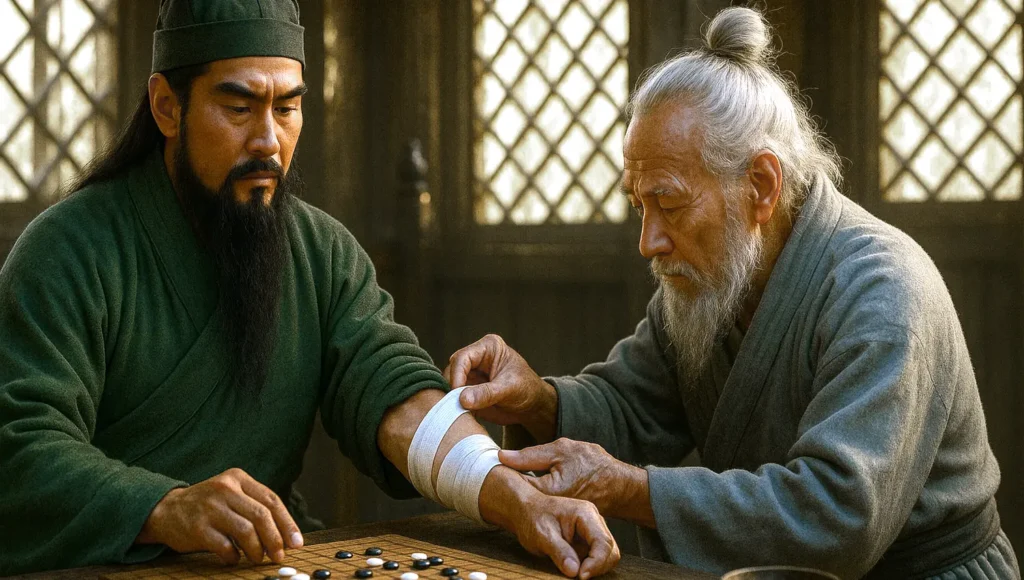
When the moment came, he entrusted the campaign to Lu Meng, whose cunning plan led to Guan Yu’s downfall and the recovery of Jing. It was a decisive move not of brute force, but of patience and timing. In the eyes of the Romance of the Three Kingdoms, it marked Sun Quan as a ruler who could turn opportunity into permanence, striking only when the odds were firmly in his favor.
This act is often seen as treacherous, yet within the logic of the Romance of the Three Kingdoms, it was brilliant statecraft. Sun Quan understood that sentiment had its limits in politics. His goal wasn’t glory; it was survival. And survival, in that era, demanded both steel and subtlety.
Ruling beyond the battlefield
In a novel overflowing with grand battles and cunning tricks, governance rarely takes center stage. Yet Sun Quan’s rule stands out precisely because of what happened after the drums faded. He turned his gaze inward — to administration, agriculture, and the cultivation of capable officials. While warlords like Liu Bei dreamed of restoring the Han, Sun Quan built something more tangible: a functioning state.
Eastern Wu’s prosperity wasn’t an accident. The fertile Yangtze delta became its economic backbone. Under Sun Quan’s policies, the region flourished. He encouraged irrigation, rewarded productivity, and supported scholars and soldiers. The Romance of the Three Kingdoms does not glorify bureaucracy, but Sun Quan made it a strength. His court, with leaders like Lu Xun, Zhuge Jin, and Zhang Zhao, thrived on open debate. Ministers argued; generals spoke freely. Sun Quan heard them, then decided.
Perhaps Sun Quan’s greatest leadership came after Zhou Yu, his trusted commander, died. Lesser rulers might have panicked, but Sun Quan built a chain of successors chosen for merit, not birth. He relied on Lu Su, whose diplomacy kept Wu’s alliance with Liu Bei alive. After Lu Su, Sun Quan promoted Lu Meng, who reclaimed Jing after defeating Guan Yu. Then came Lu Xun, young and untested, but who later crushed Liu Bei at Yiling and secured Wu’s independence.
That seamless succession — Zhou Yu to Lu Su to Lu Meng to Lu Xun — was no accident. It reflected a ruler who understood that the strength of a state lies not in one hero, but in the continuity of capable hands.
Sun Quan’s faith in talent over seniority and loyalty over flattery gave Wu unique resilience. Cao Wei had brilliance but constant intrigue. Shu Han had virtue but weak foundations. Eastern Wu, under Sun Quan, simply endured. Among the three kingdoms, Wu lasted the longest. In fiction, endurance rarely gains applause — but it is often wisdom’s truest sign.
The fractured mind of the Lord of Wu
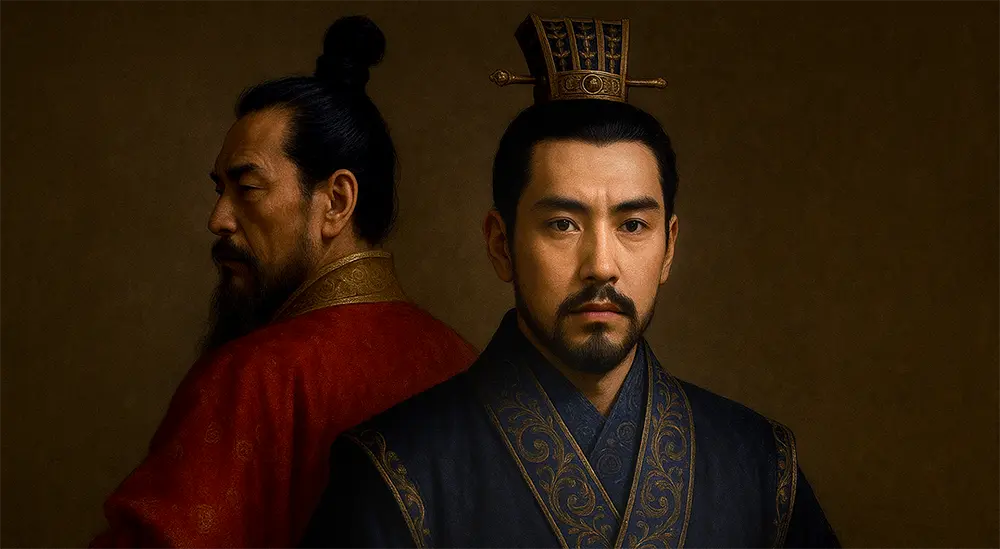
Sun Quan’s later years showed a decline not in power, but in peace of mind. After Sun Deng died, the ruler grew unstable. Grief blurred his judgment. Balance gave way to suspicion and erratic choices. Naming Sun He as crown prince but favoring another son, Sun Ba, triggered a rivalry that tore the court apart.
The palace became a nest of intrigue. Loyal ministers were punished. Trusted figures like Lu Xun and Consort Wang fell victim to his paranoia. The wise emperor who once united talents now lashed out at those protecting him. The stability he built crumbled not from attack, but from within.
By the time Sun Quan forced one son to die and banished another, his brilliance had dimmed. The man who once ruled with strategic patience became haunted by shadows of betrayal. When he finally passed, the Romance of the Three Kingdoms offers not condemnation, but quiet sorrow, the image of a great ruler undone not by war, but by the unbearable weight of loss and fear.
The measure of time
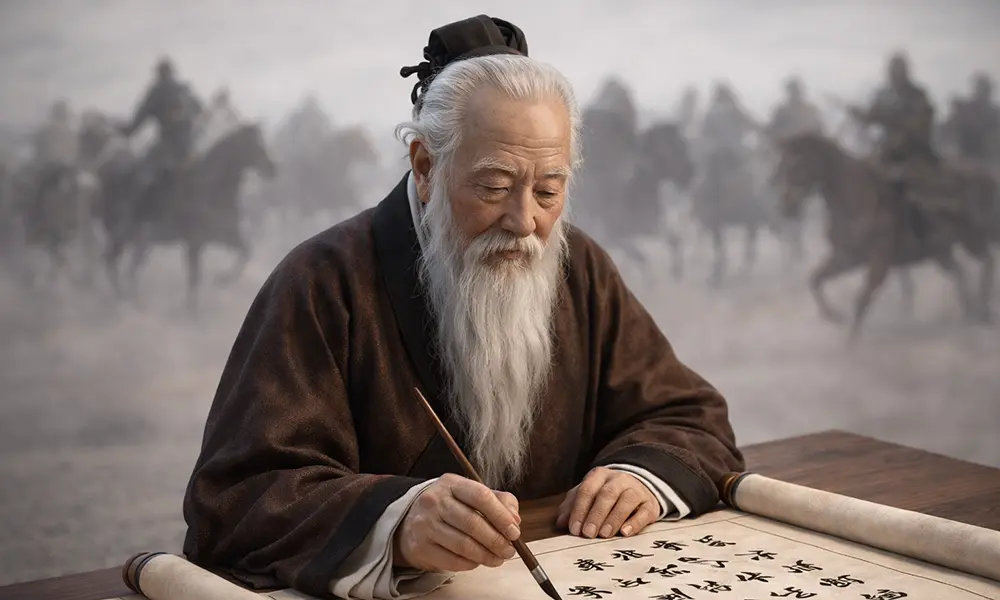
Even as his mind faltered and his empire weakened, Sun Quan’s story meditates on time. No ruler could escape its erosion. The state he built lasted longer than those of his rivals. Yet even though it was absorbed by another dynasty. The Romance of the Three Kingdoms presents his life not as a triumph or failure, but as a slow fading. He outwitted fate until time claimed him, too.
Sun Quan’s strength was not in burning brightest, but in lasting longest. His empire’s fall does not erase achievement; it completes it. In a world of fleeting brilliance, his reign reminds us that all power, no matter how carefully built, bends eventually to time.
Discover our recent stories


 Reflections
Cao Pi: Leading in the shadow of Cao Cao