Stratagems
Red Cliffs’ hidden gambit: Huang Gai’s sacrifice
Huang Gai turned a brutal beating into a masterstroke of deception. Learn how his bold plan helped ignite the Red Cliffs victory.

Rayden C
October 8, 2025 — 4 minutes read
The forgotten hand behind the flames
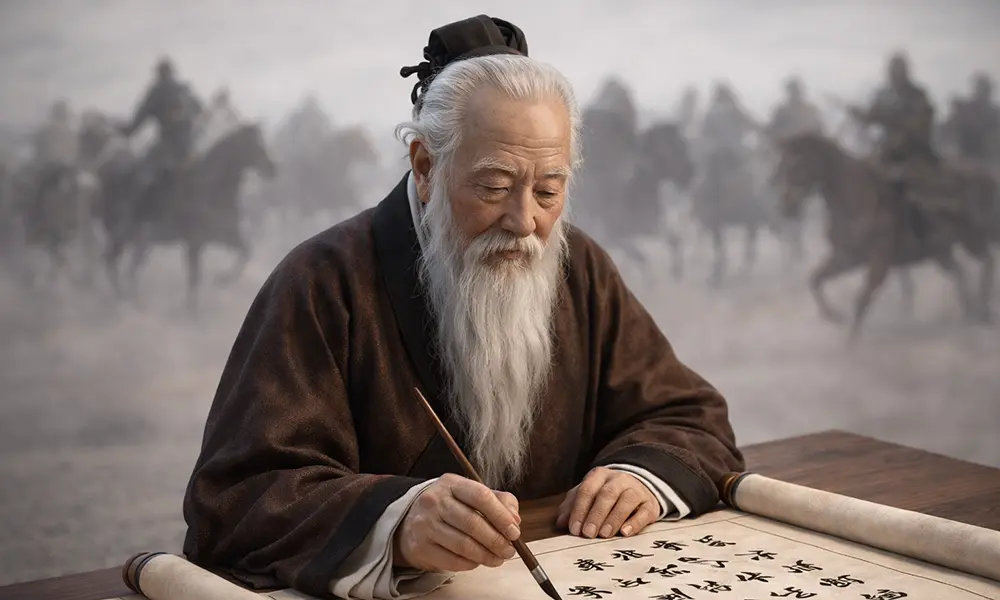
When people speak of the Battle of Red Cliffs, names like Zhuge Liang and Zhou Yu dominate the story, the strategist who summoned the winds and the commander who orchestrated victory. But hidden behind their brilliance stands another figure: Huang Gai, a veteran general whose loyalty ran so deep that he turned pain itself into a weapon.
His role was not shrouded in prophecy or genius, but in endurance. It was Huang Gai who risked everything —his body, pride, and honour —to make the impossible plan succeed. Without his act of suffering, the fire that consumed Cao Cao’s fleet might never have been lit.
The Iron General of Eastern Wu
Huang Gai was no prodigy, no court favourite, no celebrated philosopher of war. He was a soldier’s soldier, gruff, loyal, and unbending. Years of campaign had carved into him the resilience of iron.
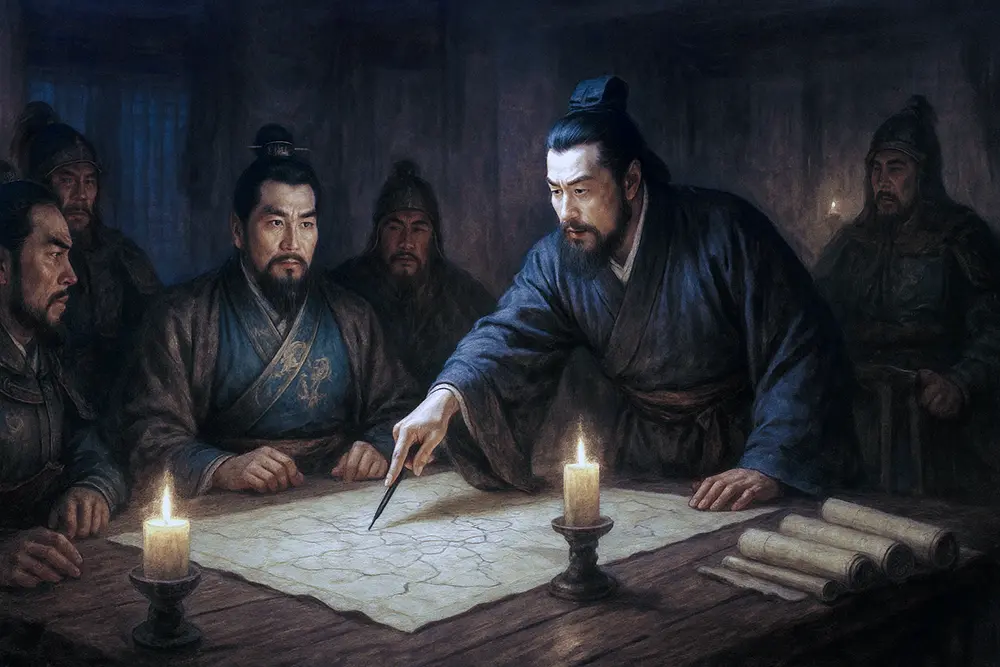
When Zhou Yu and Sun Quan debated whether Wu should surrender or fight, most feared Cao Cao’s massive fleet. But Huang Gai spoke bluntly: yielding would mean a slow death. He urged his lord to choose risk over ruin. His words, plain but piercing, reminded everyone that courage without pain is only half-hearted.
Old, scarred, and steadfast, Huang Gai understood that victory would not come from brilliance alone, but from sacrifice. And he was ready to bear it.
The beating before the fire
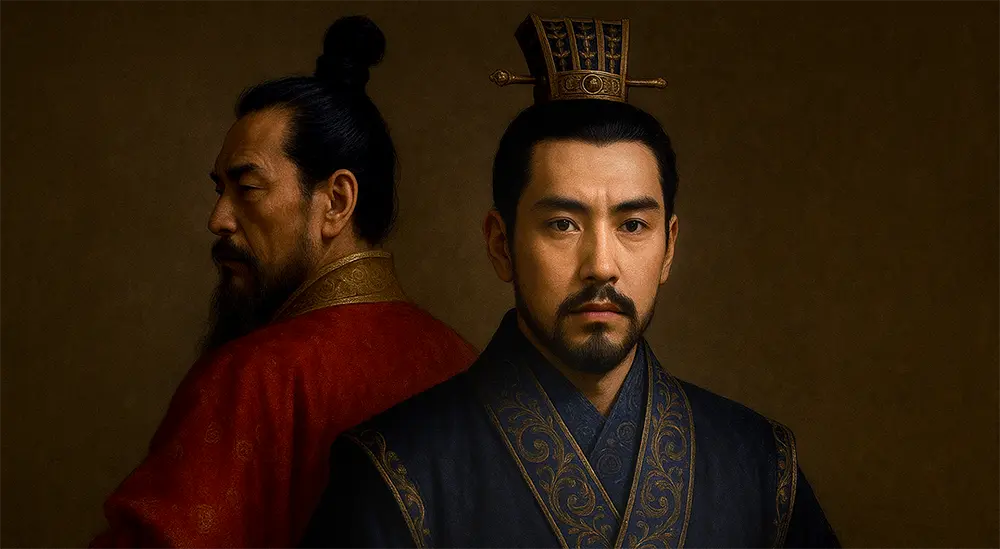
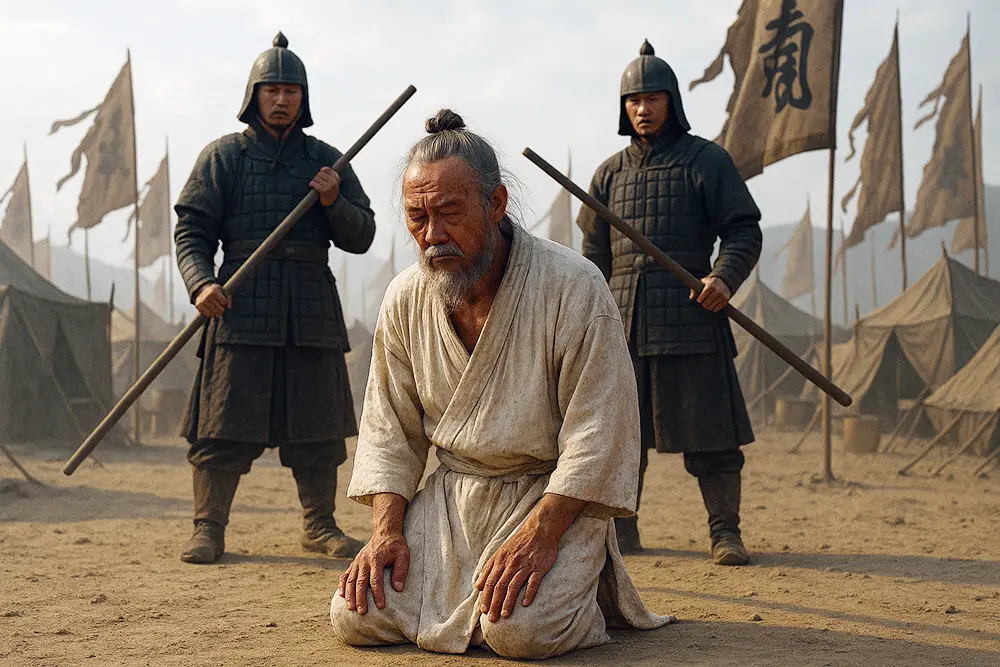
The plan they forged was madness to most, as it aimed to deceive Cao Cao by staging Huang Gai’s public punishment, making him appear as a disgraced general ready to defect.
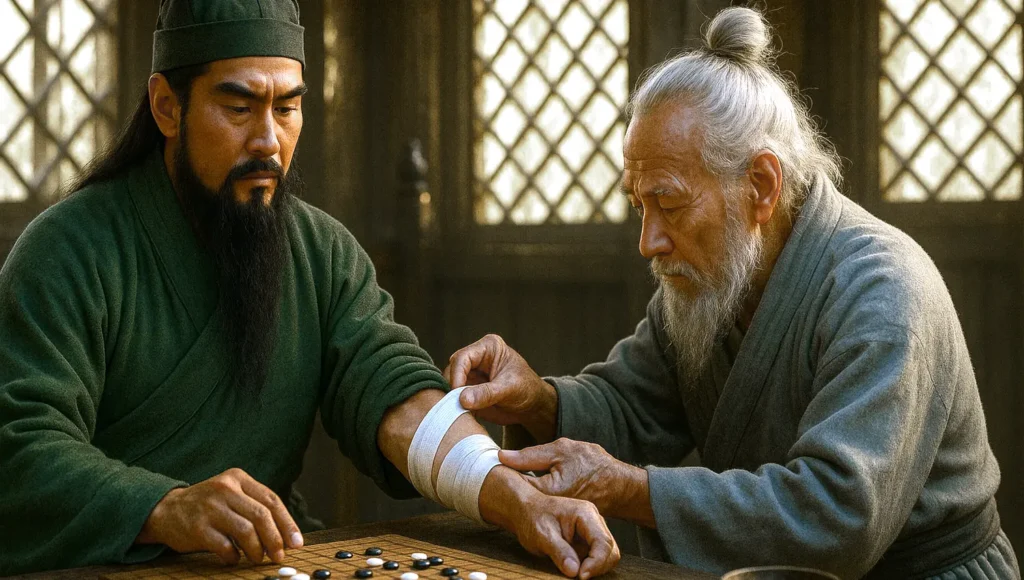
During a heated council, Huang Gai accused Zhou Yu of incompetence. Zhou Yu, playing his role, ordered him flogged in front of the entire army. The whips tore into flesh. The cries were real. Blood fell upon the stone floor.
No one knew if the deception would hold, only that it had to.
Battered and broken, Huang Gai sent word to Cao Cao, claiming betrayal and hatred for Zhou Yu. Cao Cao, proud in his own cunning, took the bait. To him, it made perfect sense: a humiliated old general seeking revenge.
The deception worked. And beneath the bruises, Huang Gai waited for the night when pain would ignite the river.
Fire on the Yangtze
Under the moonlight, the river seemed calm until Huang Gai’s fleet appeared, their sails dark and low. They came under the banner of surrender, their decks laden with oil and kindling. As Cao Cao’s men prepared to receive them, Huang Gai gave the signal.
The ships were abandoned and set aflame. The wind turned traitor against Wei, carrying the inferno straight into Cao Cao’s chained warships.
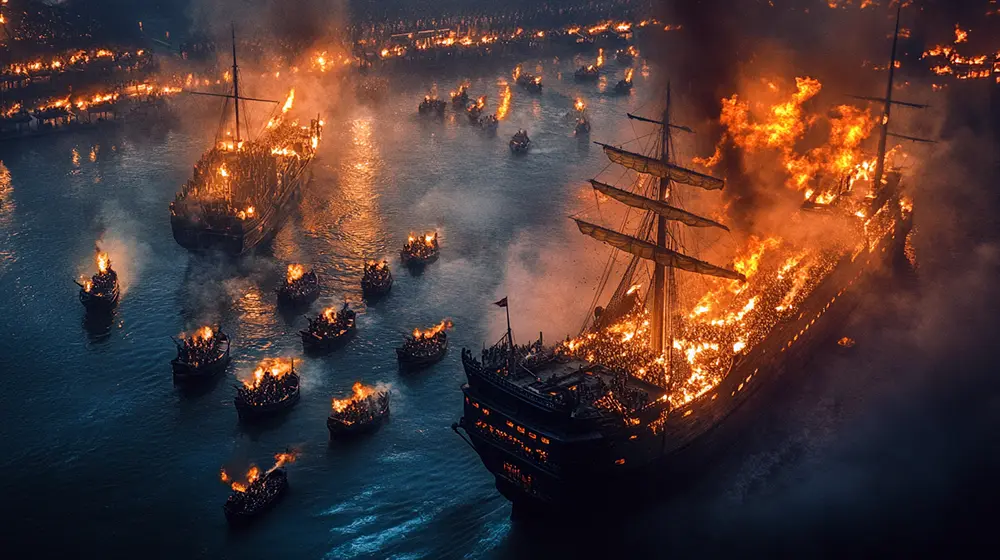
In moments, the river became a wall of fire. Men leapt into the waves, only to be swallowed by smoke and chaos. The proud northern fleet burned from bow to stern, undone not by numbers, but by deception, by one man’s willingness to bleed for victory.
Huang Gai survived, though scarred beyond measure. His name was not sung in victory songs, yet his act became the pulse of Red Cliffs, the hidden gambit that made legends possible.
The gamble that could have failed
Had Cao Cao doubted the ruse, Huang Gai’s body would have been burned long before the fleet. One letter, one whisper of suspicion, and Wu’s most excellent stratagem would have crumbled.
But fortune favours conviction. Huang Gai’s suffering was so complete, so convincing, that even the keenest mind mistook it for truth. It was not just his pain that fooled Cao Cao; it was his dignity in accepting it.
Sometimes the truest deception lies in sincerity.
Beyond the flames: The lesson of endurance
Huang Gai’s legacy is not about clever tricks or poetic speeches. It is about endurance, the strength to bear humiliation and turn it into power. His story reminds us that victory often comes not from brilliance, but from resolve.
While Zhou Yu commanded and Zhuge Liang schemed, Huang Gai endured. He proved that strategy without sacrifice is hollow, and that true loyalty may demand not obedience, but suffering.
In every era, leaders face their own Red Cliffs, moments when survival depends on enduring short-term pain for long-term triumph. Huang Gai’s act, buried beneath fire and smoke, stands as a timeless lesson:
That sometimes, the cost of victory is written in scars.
Discover our recent stories


 Reflections
Cao Pi: Leading in the shadow of Cao Cao