Reflections
Who was Luo Guanzhong? Unveiling the author of the Three Kingdoms
Who was Luo Guanzhong? Unveil the mystery behind the author of Romance of the Three Kingdoms - a failed strategist who created a literary masterpiece.

Rayden C
December 21, 2025 — 5 minutes read
If you have ever played Dynasty Warriors, watched a historical Chinese drama, or quoted the “Art of War,” you have felt the influence of Luo Guanzhong.
He has been attributed with editing Water Margin and writing Romance of the Three Kingdoms which are two of the Four Great Classical Novels of Chinese literature.
For 600 years, his work has served as the ultimate manual on power, loyalty, and strategy in East Asia. It is the Game of Thrones of the Orient, but with more real history and fewer dragons. Yet, despite creating characters that are now household legends, the man himself remains a ghost in the machine of history. Thanks to rare records and a literature study by scholar Zhao Qiping, we can finally sketch a portrait of this fascinating, somewhat tragic figure.
The loner in a time of chaos
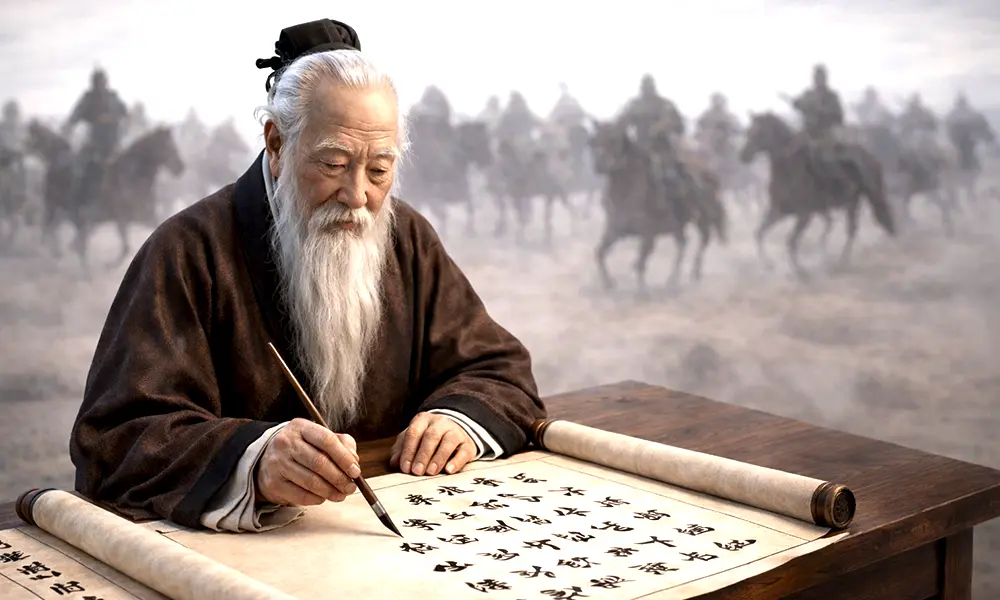
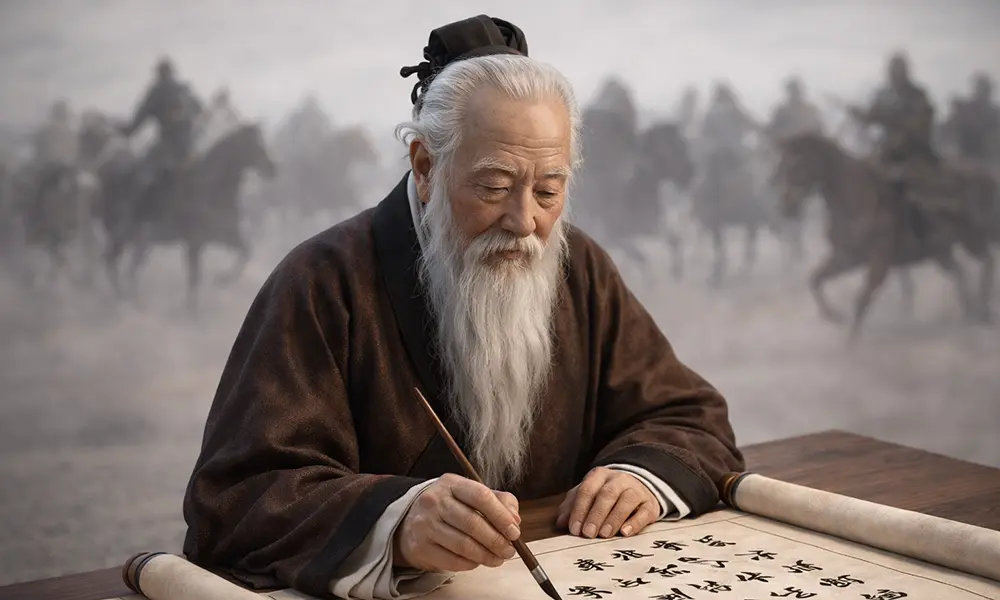
Luo Guanzhong did not live in a peaceful time. Born around 1330 in Taiyuan and later settling in Hangzhou, he lived through the violent collapse of the Yuan Dynasty and the bloody rise of the Ming. Imagine a life defined by civil war, where empires crumbled and armies burned cities daily. Perhaps because of this chaos, ancient records describe him as a “loner” (yu ren gua he) who didn’t mix well with others. He was a solitary observer, watching the world with a critical, perhaps even arrogant, eye.
The strategy expert who picked the wrong side
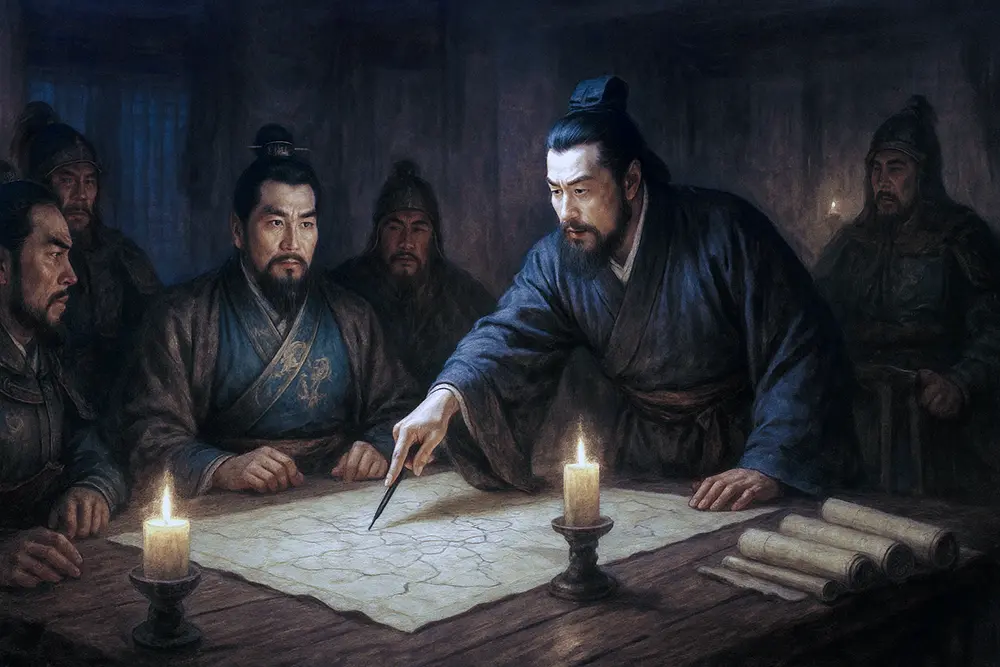
Luo’s solitary nature likely stemmed from a broken dream. Historical clues suggest he wasn’t just a writer, but a political strategist with “Kingmaker” ambitions, much like the famous advisors Zhuge Liang or Sima Yi whom he later immortalized. There is a compelling theory that during the civil wars, Luo actually served as an advisor to Zhang Shicheng, a powerful warlord fighting for control of China.
But in a tragic twist, his side lost. The rival warlord, Zhu Yuanzhang, defeated everyone to become the Hongwu Emperor of the Ming Dynasty. While his peers resigned themselves to safe, mundane lives as doctors or merchants to survive the new regime, Luo Guanzhong took a different path. He retired from politics, picked up his pen, and poured all his military knowledge, frustration, and genius into “unofficial history” (baishi).
Creating the masterpiece
Luo Guanzhong is credited with writing Romance of the Three Kingdoms, though direct evidence is limited. What scholars can trace is his role as a compiler, editor, and storyteller who transformed fragmented historical records and oral tales into a cohesive narrative. He drew on official histories, like Records of the Three Kingdoms, and combined them with vibrant folk stories circulating in markets and teahouses, carefully selecting episodes, enhancing characters, and arranging events for dramatic effect.
Scholars praise his writing for striking a perfect balance: it avoided the dense, scholarly style of classical texts, yet steered clear of the crude slang of street storytelling. The result was a work that was accessible, dramatic, and emotionally powerful. Luo didn’t just report history, he shaped it into a story that conveyed moral lessons, strategy, and human complexity.
Because he had lived through real wars, Luo portrayed both glory and horror. He described “corpses covering the fields” and the fatigue of common people, giving readers a sense of the human cost of power struggles. He infused the work with ideals, such as the longing for a benevolent ruler like Liu Bei, likely reflecting his own values and observations of human behavior in turbulent times. While no surviving document can definitively prove every editorial choice he made, literary studies, textual analysis, and comparisons with other contemporary works strongly support his central role in compiling, arranging, and refining the epic.
Did he write Water Margin too?
There is a long-standing debate regarding the authorship of Water Margin (the famous tale of 108 outlaws). The consensus from most scholars is that he likely didn’t write the whole thing, that honor belongs to Shi Naian. However, Luo Guanzhong was likely the editor who polished it, and some sources even claim he was Shi Naian’s student. He was essentially the greatest literary editor of his time, fixing and organizing stories until they became classics.
A legacy that outlived the man
Luo Guanzhong likely died in the late 14th century. Little is known about his final years, and his burial place remains a mystery. By the standards of his time, he may not have lived an extraordinary life. Yet his writing endured. Through Romance of the Three Kingdoms, Luo shaped how generations understand loyalty, ambition, and human nature. From revolutionaries like Mao Zedong to business leaders and modern gamers, his stories have inspired millions, providing insight, strategy, and imagination across centuries. In the end, Luo Guanzhong did not need a title or a tomb to leave his mark, his legacy lives on every time his stories are read, studied, or played.
Discover our recent stories


 Reflections
Cao Pi: Leading in the shadow of Cao Cao