Chronicles
Lü Bu: Was he really China’s greatest warrior?
Lü Bu, the fiercest warrior of the Three Kingdoms, rose through power and passion but fell to pride, betrayal, and Liu Bei’s final warning.

Rayden C
October 20, 2025 — 7 minutes read
The legend of the peerless fighter
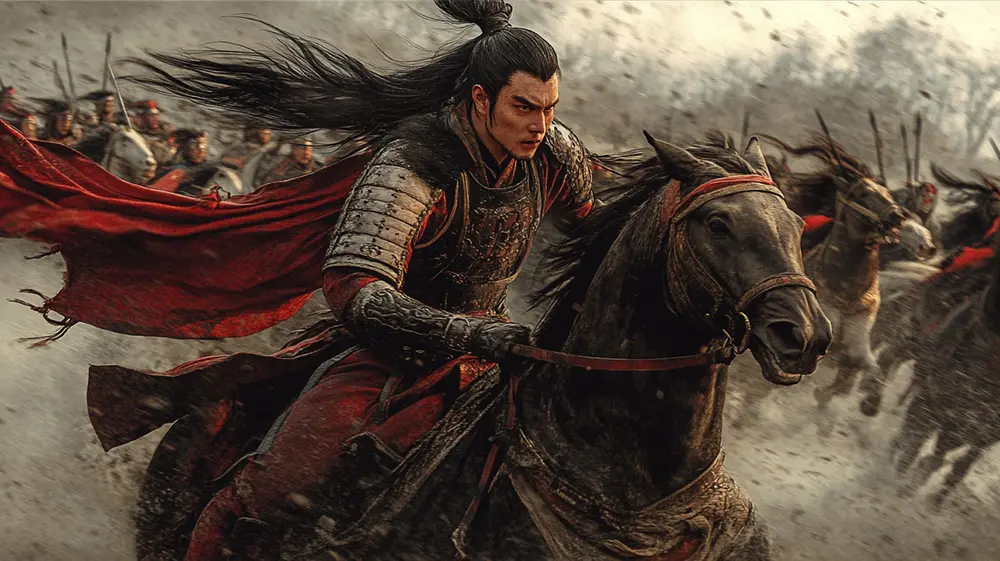
In Romance of the Three Kingdoms, Lü Bu’s name inspires awe. He storms into the story, fearless and proud. Astride his blood-red stallion Red Hare, halberd glinting, he embodies battlefield might. His legendary duel at Hulao Pass against Liu Bei, Guan Yu, and Zhang Fei is electrifying. Even united, the three cannot best him; he holds his ground, roaring and slashing like a god of war.
That scene alone crowns him as the “peerless warrior.” Even Guan Yu later concedes that no man under heaven could match Lü Bu’s strength. To readers, he is not just a fighter; he is a force of nature, the purest expression of physical power.
But as the Romance of the Three Kingdoms unfolds, the story moves beyond simple admiration, transforming Lü Bu’s great strength into both a blessing and a curse. With each new chapter, his unmatched might turns into isolation.
Strength without loyalty
Lü Bu’s tragedy begins with betrayal. His first master, Ding Yuan, treats him like a son. Dong Zhuo, tempted by power, lures him with gifts, gold, and the magnificent Red Hare. In a moment of ambition and greed, Lü Bu kills his adoptive father and joins the tyrant of Luoyang. For a while, he rules as Dong Zhuo’s champion, a terrifying enforcer, feared across the empire.
Wang Yun, a loyal Han minister, cannot endure Dong Zhuo’s cruelty and devises a plan: he promises his foster daughter Diao Chan to both Dong Zhuo and Lü Bu, fueling jealousy and rage. Heartache and betrayal drive Lü Bu to kill Dong Zhuo in court, ending the tyrant’s reign in a single stroke.
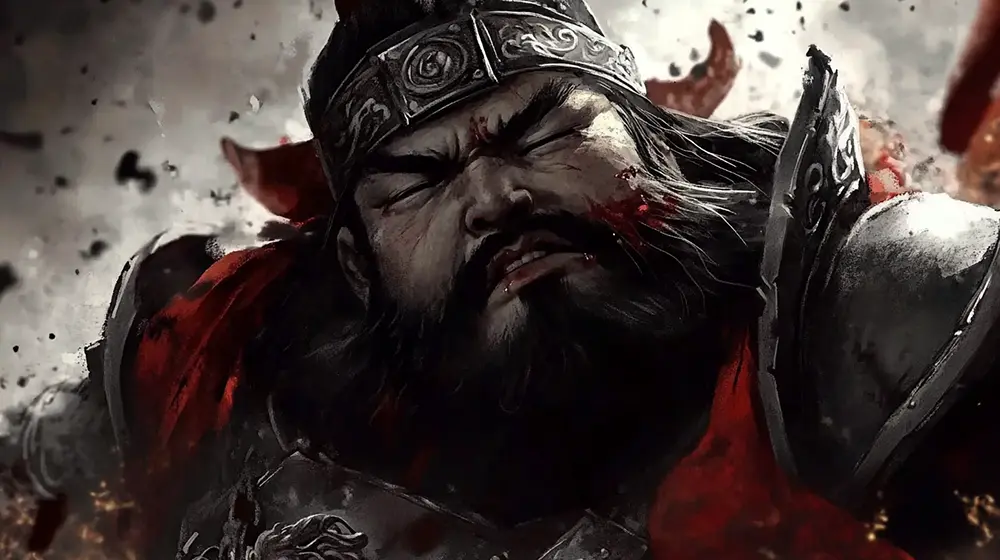
It should have been his greatest victory, yet it became the start of his downfall. By killing Dong Zhuo, Lü Bu wins fame but loses every ally in the north. Without a master and lacking trust, he soon drifts from warlord to warlord, a hero too dangerous to follow, too proud to serve.
The shadow of Chen Gong
Among the few who see hope in Lü Bu is Chen Gong, a man of intellect and conviction. Their meeting is one of the novel’s most poignant. Chen Gong, once a magistrate under Cao Cao, defects after witnessing cruelty and joins Lü Bu, believing his strength could restore order. For a while, their partnership shines with promise. Lü Bu listens, Chen Gong advises, and together they carve out territory.
Yet the cracks soon reappear. Lü Bu’s short temper and indecision clash with Chen Gong’s careful strategy. The warrior who can defeat any foe cannot defeat his own pride. When Chen Gui and Chen Deng, father and son officials from Xuzhou, approach with honeyed words, Chen Gong warns that they are deceivers. They flatter Lü Bu as a hero of virtue and offer friendship, but secretly plot with Cao Cao. True to form, Lü Bu ignores the warning, convinced that strength alone will protect him.
It is a fateful mistake. Chen Gui and Chen Deng lure him into complacency, promising peace while quietly preparing his downfall. By the time Lü Bu realizes their betrayal, the trap is already set, and Cao Cao’s army is marching toward Xiapi.
The fall of Xiapi
The siege of Xiapi is among the novel’s tensest, a battle steeped in tragedy. Lü Bu commands towering walls and brave soldiers. Yet his spirit cracks. Chen Gong presses for quick action: strike or flee. Lü Bu hesitates, trapped between his fear of losing and his reluctance to seem weak.
Inside Xiapi, discipline unravels. Supplies dwindling, trust collapses. After a skirmish, Lü Bu suspects Hou Cheng of plotting rebellion and orders his execution. Hou Cheng escapes, joins Cao Cao, and spreads word of Lü Bu’s madness. Morale in Xiapi shatters.
Chen Gong, ever loyal, stays until the bitter end. Begging Lü Bu to face reality brings no relief; the once-mighty warrior turns to wine, not wisdom. Rain floods the city, and arrows darken the sky. Surrender becomes common among Lü Bu’s soldiers, one after another. The man who once faced three heroes at Hulao Pass struggles now even to command his own gates.
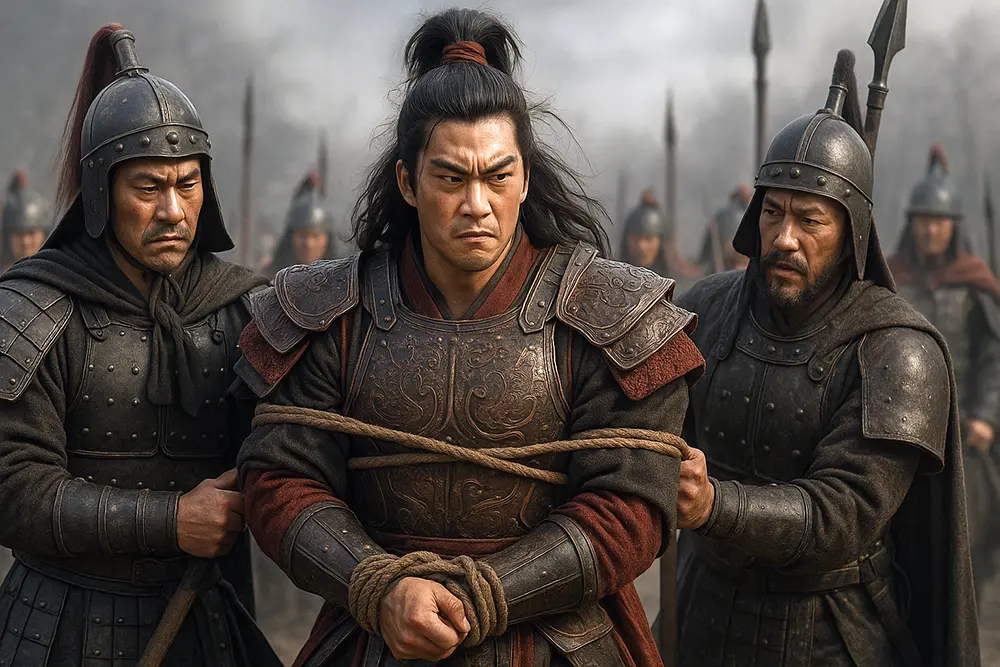
When Xiapi finally falls, Lü Bu and Chen Gong are captured alive. Bound and kneeling before Cao Cao, Lü Bu makes one last plea. “Unbind me and use me,” he says, promising to fight for his conqueror. Cao Cao pauses, tempted by the idea of harnessing such power, but Liu Bei, standing nearby, intervenes. “My lord,” he warns, “have you forgotten Ding Yuan and Dong Zhuo? Lü Bu cannot be trusted.” The reminder is enough. Cao Cao nods, and the order is given. Lü Bu meets his end beneath the executioner’s blade, while Chen Gong accepts death in silence, his loyalty unbroken even in defeat.
In that moment, the Romance of the Three Kingdoms delivers poetic justice. The warrior who betrayed every master is betrayed by his own men. The hero who feared disloyalty becomes its final victim. Strength without faith ends in silence.
The myth versus the man
Lü Bu’s legend has outlived every kingdom, yet his story remains one of contradiction: he is both the strongest and the weakest man in Romance of the Three Kingdoms, a hero in battle, a failure everywhere else. His power wins glory, but his pride, temper, and suspicion isolate and ruin him.
The bond with Chen Gong throws Lü Bu’s failings into sharp relief: Chen Gong is loyal, patient, and thoughtful, everything Lü Bu is not. At the end, their opposing traits define their fates. One dies with honor, the other with regret, making the contrast central to Lü Bu’s story.
Diao Chan’s beauty ignites love and doom, mirroring Lü Bu’s weakness and failure to master desire. In Three Kingdoms, every hero has a flaw: Liu Bei’s kindness is sentimental, Guan Yu’s pride turns arrogant, Lü Bu’s strength consumes itself. This balance of brilliance and blindness makes the novel timeless—and its lessons modern. In every field, there are Lü Bus: brilliant but undone by ego and distrust.
True leadership isn’t about force, but dependability, another stark contrast to Lü Bu’s legend. He could defeat any enemy, but never maintain an alliance. In a world governed by trust and partnership, his might brought only solitude. His story shows: trust is lasting strength; suspicion is hidden weakness. Lü Bu, chasing a peerless reputation, became a victim of his own image. The harder he pursued perfection, the more unstable his power became, a common paradox for today’s high achievers.
Yet even after defeat, Lü Bu’s presence endures. His failure is magnetic, a reminder that even ruin can echo through history if it carries emotion and truth.
For those who chase greatness, Lü Bu’s fall carries a quiet message: skill opens doors; character keeps them open. Strength commands attention, but loyalty earns respect. The Three Kingdoms’ strongest warrior shows us that real power lies in how deeply others believe in you.
Discover our recent stories


 Reflections
Cao Pi: Leading in the shadow of Cao Cao