Chronicles
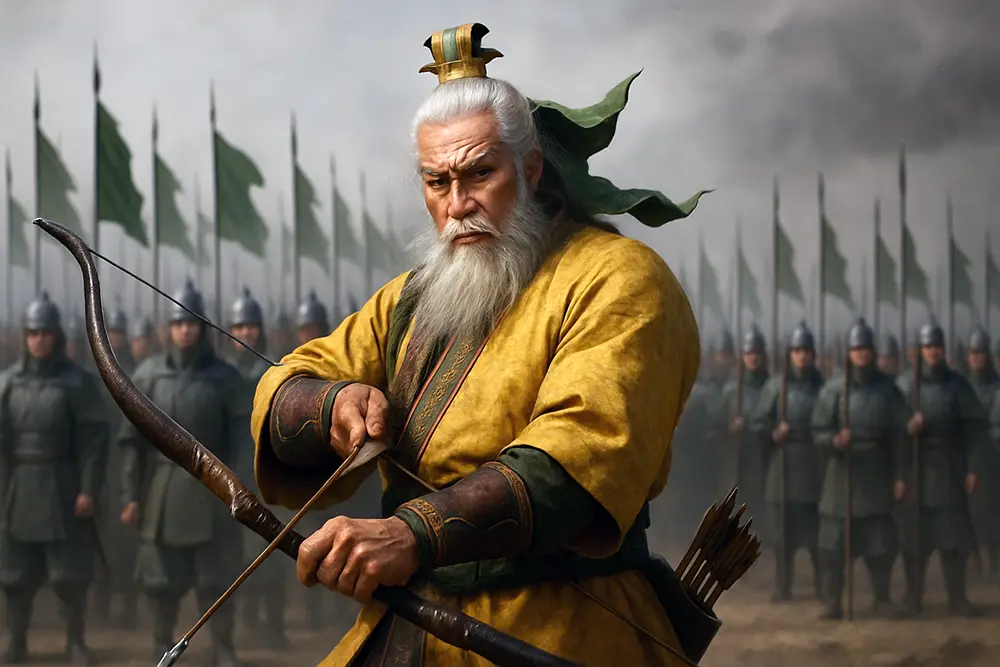
Huang Zhong: Old but fierce
Huang Zhong, the aging warrior of Shu, defied expectations by slaying Xiahou Yuan at Dingjun Mountain. His story proves valor and glory are not bound by age.

Rayden C
September 15, 2025 — 4 minutes read
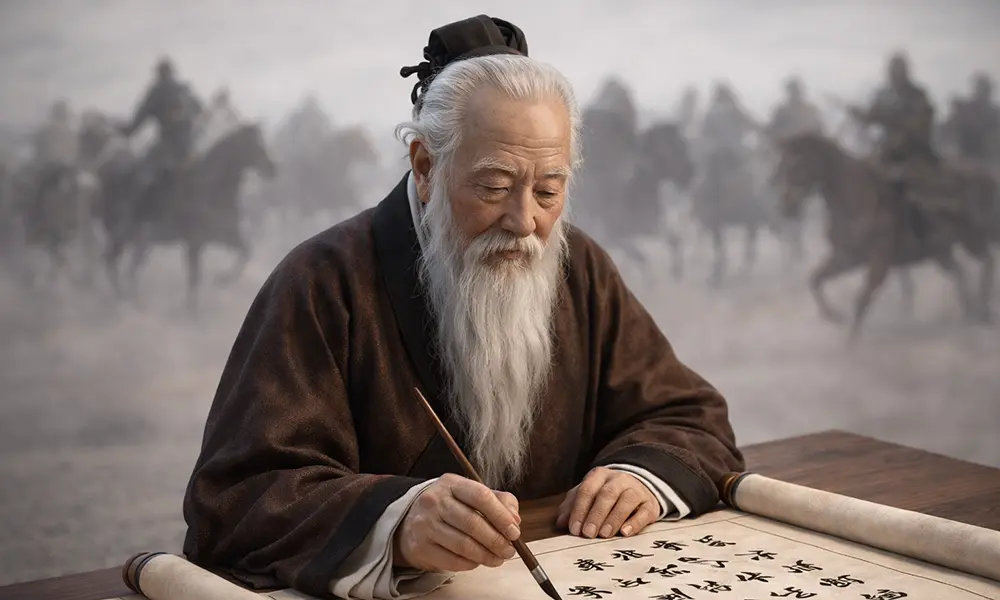
In the turbulent age of the Three Kingdoms, warriors rose and fell with dizzying speed. Youth and vigor seemed to dominate the battlefield, where men like Zhao Yun dazzled with their courage and Guan Yu carved his legend with a blade. Yet in the midst of these youthful champions stood Huang Zhong, gray-haired, aging, yet still fierce. Far from fading into obscurity, he proved that valor and strength were not the sole property of the young. His story is one of late-blooming glory, a reminder that the measure of a man’s prime is not dictated by years.
The old general of Changsha
Huang Zhong first served under Han Xuan, a minor warlord in Changsha. By the time Liu Bei came south, Huang Zhong was already advanced in years, but his martial reputation was intact. When Han Xuan surrendered, Huang Zhong joined Liu Bei’s ranks, not as a relic of a past generation, but as a capable warrior still eager for battle.
It would have been easy to relegate him to ceremonial roles, as many commanders did with aging officers. Instead, Liu Bei recognized his enduring strength. What followed was a second act that few could have predicted.
Defying age on the battlefield
Huang Zhong’s true moment came during Liu Bei’s Hanzhong campaign. By then, he was well into his sixties, an age at which most men would have long abandoned the saddle. Yet Huang Zhong not only took the field, he led from the front.
At Dingjun Mountain, he fought against Xiahou Yuan, one of Cao Cao’s most respected generals. In a clash that would tilt the balance of the campaign, Huang Zhong struck down Xiahou Yuan, sending shockwaves through both armies. For Shu, it was a triumph; for Huang Zhong, it was vindication.
The image of an older warrior felling a rival decades younger became a symbol of courage undimmed by age. His victory elevated Liu Bei’s prestige and secured Hanzhong, but it also immortalized Huang Zhong as more than just another name in Shu’s roster.
More than muscle
Huang Zhong was not only remembered for his battlefield ferocity. Accounts speak of his discipline, his loyalty, and his refusal to see himself as diminished despite his age. He carried the wisdom of years into combat, tempering boldness with judgment.
For Liu Bei, who valued men of both talent and character, Huang Zhong represented an ideal: a general whose usefulness had not expired with time. In a world where reputations were often built on youthful audacity, Huang Zhong showed that endurance and experience could also command respect.
Lessons from an old warrior
Huang Zhong’s legacy resonates because it challenges assumptions. Age did not reduce him; if anything, it sharpened him. His story offers timeless reflections:
- Strength takes many forms. Physical vigor fades, but experience and resilience can still tilt the balance.
- Opportunity can come late. Huang Zhong achieved his greatest fame not in youth but in old age, proving it is never too late for impact.
- Respect the overlooked. Liu Bei’s decision to value Huang Zhong gave Shu a champion that others might have discarded.
The human face of valor
Unlike Guan Yu with his divine aura or Zhao Yun with his flawless image, Huang Zhong feels almost relatable. He was not perfect, not immortal, but human, a man who grew old in a brutal age, yet still proved his worth when it mattered most.
His induction as one of the “Five Tiger Generals” of Shu Han was not merely an honorific. It was recognition that courage does not fade with the color of one’s hair. Huang Zhong’s life reminds us that valor is not bound to youth, and that history’s stage is open even to those who arrive late.
Discover our recent stories


 Reflections
Cao Pi: Leading in the shadow of Cao Cao