Stratagems
Deng Ai’s secret mountain march
In 263 CE, Deng Ai led his troops through impossible mountain passes to outflank Shu. His daring march ended Liu Shan’s reign and changed the Three Kingdoms forever.

Rayden C
September 15, 2025 — 4 minutes read
In 263 CE, Shu Han fell with barely a fight. Liu Shan, the last emperor, surrendered in Chengdu not after a great battle, but after a shock, a Wei army suddenly appeared at his gates. The commander was Deng Ai, a man who had done the unthinkable: he had marched his soldiers through mountains that even locals considered impassable. That march ended an empire.
An ending few expected
For decades, Shu had survived on stubbornness. Zhuge Liang’s campaigns had failed, but his discipline left the state organized. Jiang Wei fought on, harassing Wei year after year. To the people of Shu, survival seemed possible, even if victory was not. No one imagined collapse would come in a single season.
Yet when Deng Ai’s troops emerged from the mountains, the kingdom had no defenses ready. Chengdu surrendered without resistance. Shu’s end was not a gradual decline but a sudden fall, engineered by one man’s willingness to risk everything.
The mad proposal
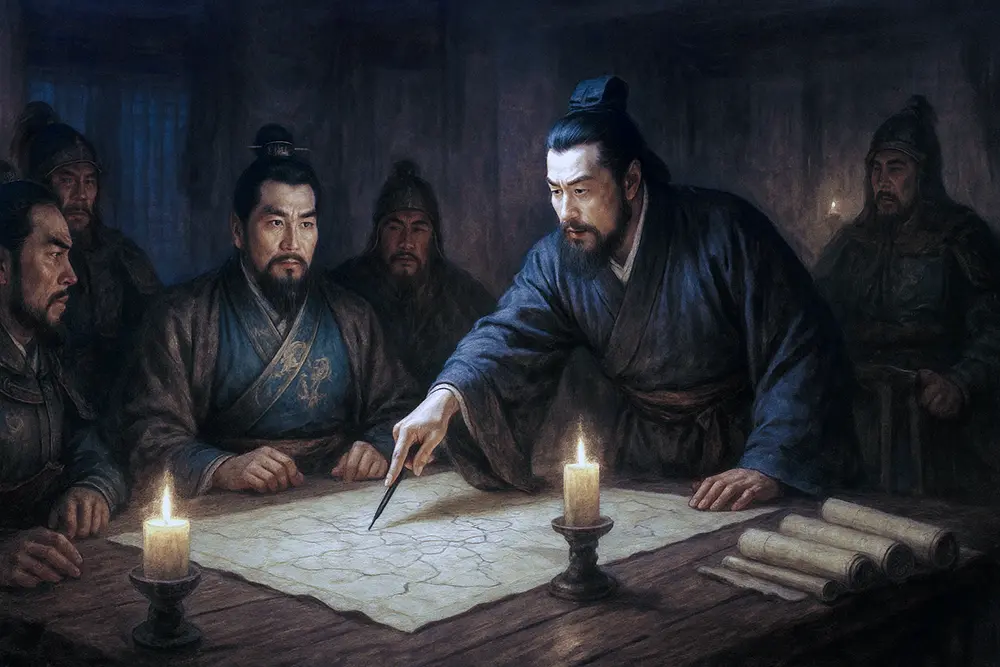
Deng Ai’s plan sounded absurd. Instead of reinforcing Wei’s main front against Jiang Wei, he argued for a detour. He would take a smaller force, abandon conventional supply lines, and cut through mountain passes few maps even marked.
Wei officials balked. Soldiers could starve. Horses could fall off cliffs. An entire army could vanish in silence. But Deng Ai insisted that impossibility was the point. Shu would never guard against what it could not imagine.
Against the odds, he won approval.
The march itself
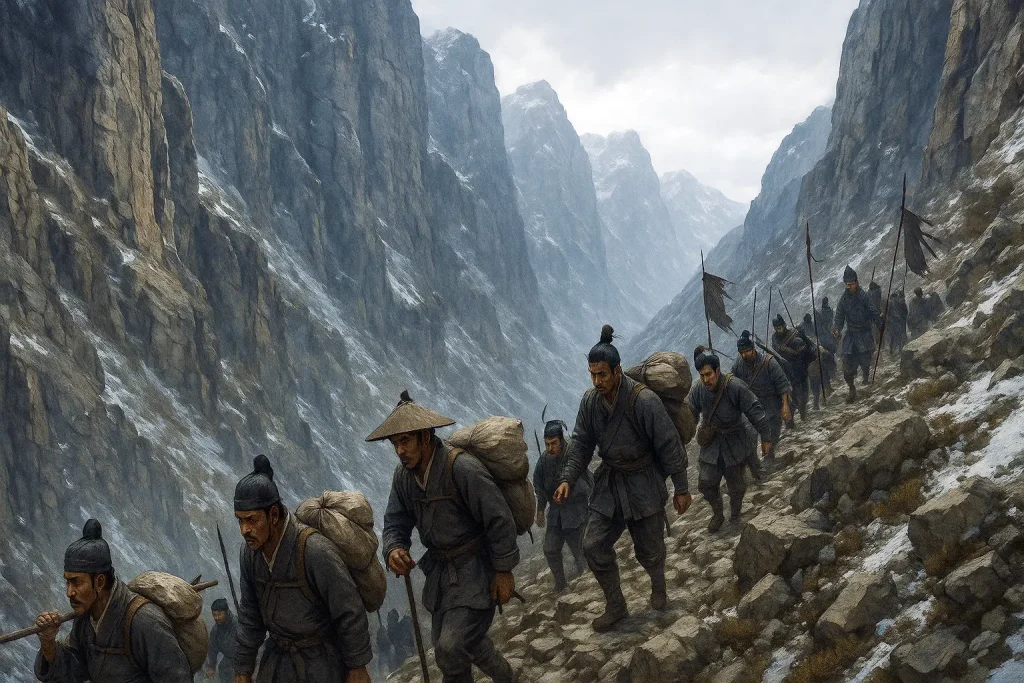
What followed was less a campaign than a trial of endurance. Soldiers hacked through forests, built rope bridges, and dragged themselves over ridges where even mules struggled. Accounts describe Deng Ai himself pushing forward on foot, sharing the same exhaustion as his men.
Each step was a gamble. Supplies dwindled. Morale wavered. Yet momentum carried them forward. Days later, when they finally descended onto fertile ground near Chengdu, the gamble had paid off.
The collapse of Shu
The reaction in Shu was disbelief. Jiang Wei’s army was pinned far away by Zhong Hui, unaware that Deng Ai had bypassed him. Liu Shan’s court had no time to muster a defense. Faced with an unexpected enemy at his gates, the emperor surrendered.
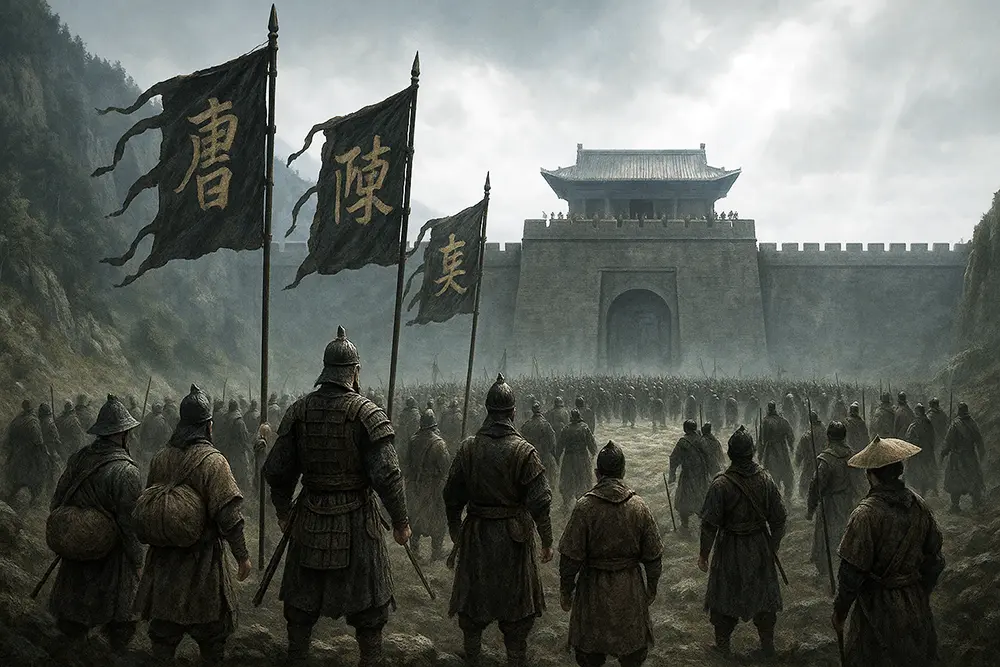
Three kingdoms became two. A century of struggle, strategy, and survival in Shu ended not with Zhuge Liang’s brilliance or Jiang Wei’s defiance, but with Deng Ai’s audacity.
Lessons hidden in the mountains
The march offers lessons not just in military daring but in decision-making itself:
- Impossibility can be opportunity. What others dismiss as madness may be the very gap no one defends.
- Logistics is strategy. Victory wasn’t about battlefield brilliance, it was about moving men where no enemy expected.
- Risk defines legacy. Had Deng Ai failed, his name would have been a cautionary tale. Instead, he became the man who ended Shu.
Triumph without reward
Deng Ai’s story doesn’t end with glory. Soon after Shu’s surrender, he was accused of plotting rebellion. Rival generals feared his rising fame. Arrested during Zhong Hui’s mutiny, Deng Ai was executed before ever enjoying the empire he had toppled.
It is one of history’s cruel ironies: the general who destroyed Shu was destroyed by his own side.
Why Deng Ai still matters
Deng Ai’s march was not just a military maneuver — it was a statement about daring. He proved that convention is not destiny and that sometimes the surest path is the one no one else dares to take.
For Shu, his decision spelled the end. For history, it remains a reminder that the boldest moves can overturn decades of struggle in a single stroke.
Discover our recent stories


 Reflections
Cao Pi: Leading in the shadow of Cao Cao