Chronicles
Ma Dai: The shadow cousin who struck Wei Yan
Ma Dai, cousin of Ma Chao, lived in the shadows of Shu until one decisive act, the killing of Wei Yan. Was it loyalty to Shu, or survival through betrayal?

Rayden C
September 22, 2025 — 5 minutes read
Not all stories in the Three Kingdoms are tales of glory. Some unfold in whispers, accusations, and sudden violence. Ma Dai, a cousin of the famed Ma Chao, rarely appears in the spotlight. Yet in one decisive moment, he stepped out of the shadows, to kill a fellow Shu general, Wei Yan, in the aftermath of Zhuge Liang’s death. His act was swift, brutal, and ambiguous. Was it loyalty to Shu, or survival in a storm of intrigue?
A general in the background
Ma Dai’s early career was overshadowed by his cousin Ma Chao, one of Shu’s Five Tiger Generals. Where Ma Chao’s fiery temper and battlefield courage earned renown, Ma Dai remained in supporting roles. He followed Liu Bei into Shu and served faithfully, but he was never counted among the state’s luminaries.
In many ways, he was the archetype of the secondary general: capable enough to be trusted, but rarely at the center of campaigns. His moment of prominence came not against Wei or Wu, but within Shu itself, when suspicion tore apart its commanders.
The rift with Wei Yan
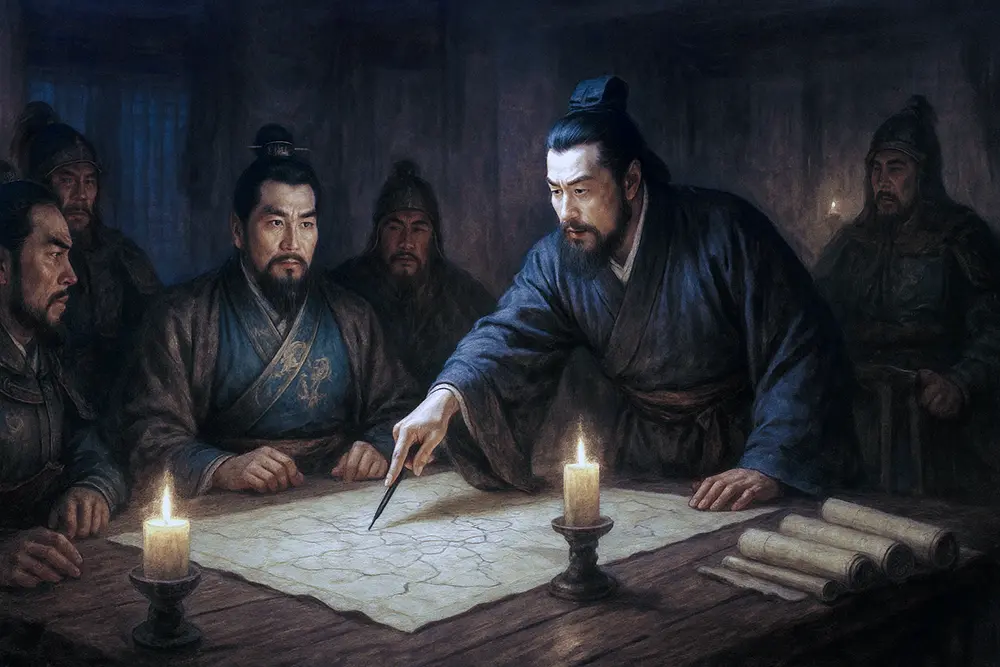
When Zhuge Liang died in 234 CE during the Northern Campaigns, Shu was thrown into uncertainty. Without its chief strategist, the army needed to retreat safely back into Sichuan. That retreat, however, became the flashpoint for a bitter conflict.
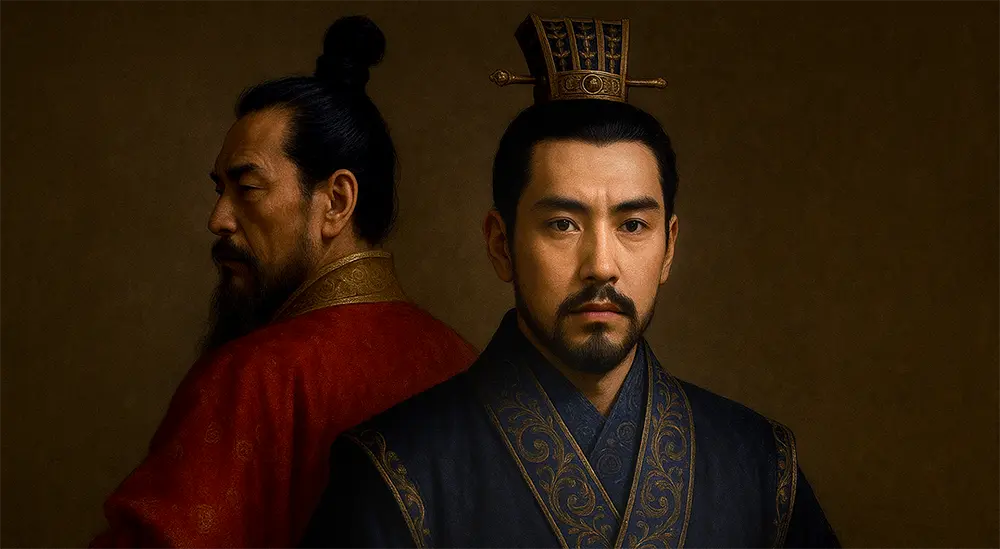
Wei Yan, one of Shu’s senior commanders, clashed with Yang Yi, Zhuge Liang’s administrative deputy. Wei Yan argued for one route of retreat, Yang Yi insisted on another. Harsh words escalated into accusations. Yang Yi accused Wei Yan of treason, claiming he sought to seize power in the chaos. Wei Yan branded Yang Yi a schemer destroying loyal men.
The truth is hard to parse. Was Wei Yan truly planning rebellion? Or was he simply a hot-headed general who found himself on the wrong side of politics?
Laughter in the novel
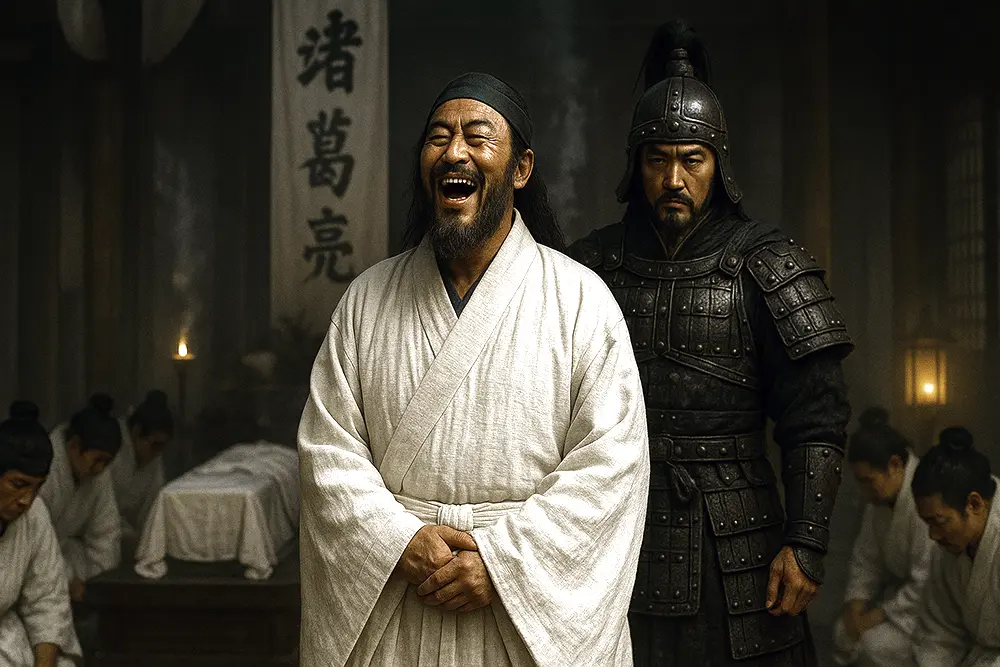
The Romance of the Three Kingdoms leaves little doubt about Wei Yan’s guilt. In the novel, when Zhuge Liang dies, Wei Yan is said to laugh, boasting that no one can now restrain him. This moment paints him as arrogant, ungrateful, and disloyal, a foil to Zhuge Liang’s brilliance and loyalty.
It makes for a vivid story: the faithful prime minister dies, the ambitious subordinate reveals his true colors, and justice arrives swiftly. In this telling, Ma Dai’s killing of Wei Yan is righteous vengeance, a necessary strike to protect Shu.
History without the drama
But the Records of the Three Kingdoms tell a quieter tale. They make no mention of laughter or boasts. Instead, the conflict appears bureaucratic as much as military. Wei Yan wanted one retreat route, Yang Yi another. Their quarrel spiraled. Yang Yi, who controlled official channels, declared Wei Yan a traitor.
In this account, Wei Yan comes across less as a villain and more as a victim of factional rivalry. He may have been impulsive, but he was no laughing usurper. If so, Ma Dai’s killing becomes murkier. Rather than executing a clear traitor, he may have eliminated a fellow general condemned by political convenience.
The killing blow
The end came swiftly. Wei Yan, retreating with his men, was caught by Ma Dai. Rather than side with him, Ma Dai struck. He killed Wei Yan and delivered his head as proof of loyalty.
To some, this was the act of a loyal servant of Shu, removing a dangerous threat to unity during a precarious retreat. To others, it was betrayal cloaked as obedience, an opportunist ensuring his own survival by siding with Yang Yi.
Loyalty or survival?
Ma Dai’s act raises uncomfortable questions. Was he the hand of justice or merely the blade of politics?
- If Wei Yan truly plotted rebellion, then Ma Dai’s strike saved Shu from civil war.
- If Wei Yan was falsely accused, then Ma Dai became the tool of a purge, killing a loyal but hot-tempered general to secure his own standing.
In either case, Ma Dai did not act independently. He became the executor of another man’s decision, remembered more for his role in another’s downfall than for his own deeds.
A shadowed legacy
Unlike the celebrated warriors of Shu, Ma Dai’s legacy is not one of triumph but of ambiguity. His name lingers in history almost solely because of Wei Yan’s death. In folklore and in the Romance of the Three Kingdoms, this act is dramatized as both decisive and treacherous, cementing him as the “shadow cousin” who struck when commanded.
He reminds us that history is not only written by heroes, but also by those who carry out grim necessities. His story sits at the murky intersection of loyalty and ambition, where survival sometimes demands betrayal.
The quiet power of secondary figures
Ma Dai’s role underscores how even secondary figures can alter the course of a state. Wei Yan’s death ended any chance of Shu being destabilized by internal rebellion during its retreat. Yet it also deprived Shu of one of its most seasoned commanders. The cost of order was the silencing of dissent — and Ma Dai was the blade that made it possible.
He was not a star like Zhuge Liang or Guan Yu. But in one violent stroke, he shaped Shu’s destiny as much as any of them.
Discover our recent stories


 Reflections
Cao Pi: Leading in the shadow of Cao Cao