Stratagems
Zhuge Liang’s best and worst strategies
Discover Zhuge Liang’s most significant victories and mistakes in Romance of the Three Kingdoms, how calm thinking and human flaws shaped his legendary legacy.

Rayden C
September 1, 2025 — 7 minutes read
Rise of a genius
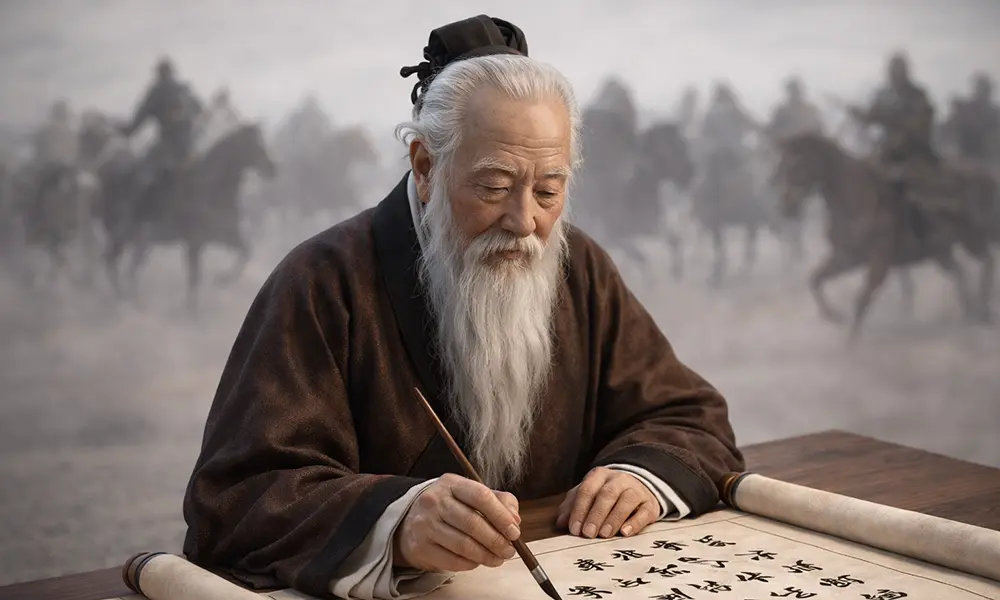
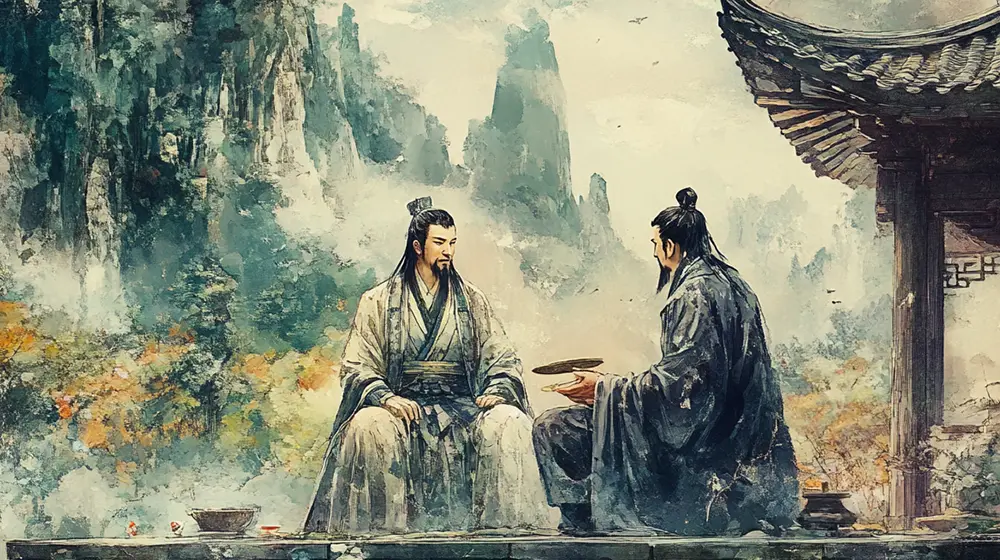
In Romance of the Three Kingdoms, Zhuge Liang’s story begins not with triumph, but stillness. While warlords clashed for power, he lived in quiet retreat at Longzhong, a man of thought rather than ambition, tending to fields while contemplating the fate of an empire.
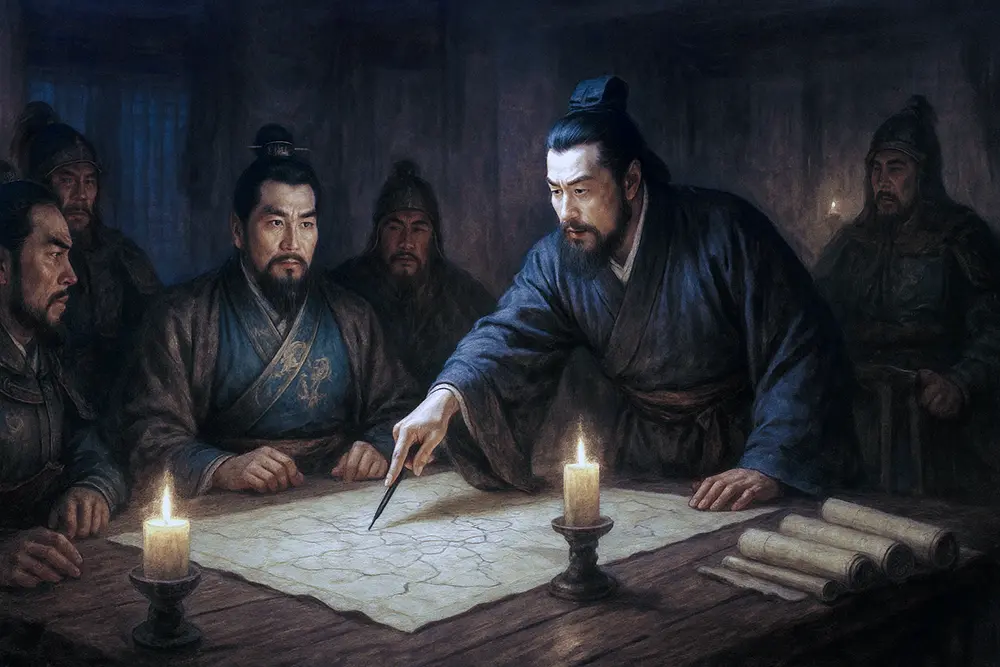
Liu Bei’s three visits to his thatched cottage became one of the defining moments of Chinese literature, the meeting of desperation and destiny. When the humble warlord finally earned the audience of the reclusive scholar, Zhuge Liang revealed the Longzhong Plan: a vision to divide the realm into three and restore balance to the Han. It wasn’t mere advice; it was prophecy dressed in reason.
That encounter marks the true beginning of Zhuge Liang’s rise. Luo Guanzhong paints him not as a man chasing power, but as one summoned by duty. His genius isn’t measured in conquests, but in clarity, the ability to see patterns in chaos and to respond with patience, not haste.
In that quiet cottage, before the armies and politics, the legend of the “Sleeping Dragon” was born.
Masterstrokes that defined a career
In Luo Guanzhong’s world, intellect is both weapon and shield and no one wields it better than Zhuge Liang. His finest strategies in the Romance are not displays of brute force, but of timing, restraint, and insight into human nature.
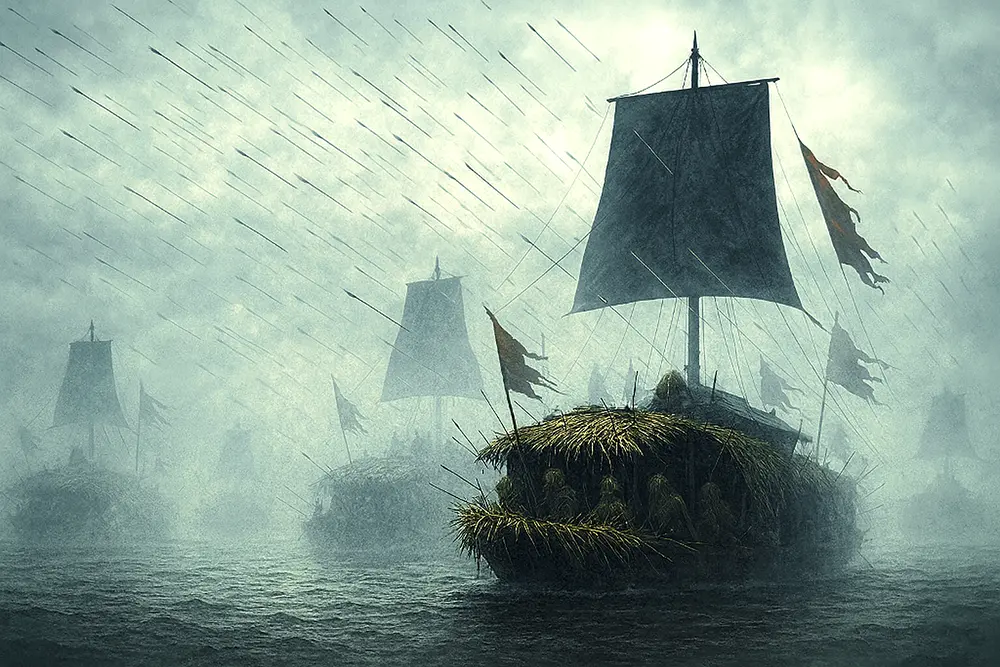
The Borrowing Arrows with Straw Boats story captures this perfectly. Facing a shortage of ammunition before battle, Zhuge Liang supposedly tricks Cao Cao’s fleet into firing volleys at decoy boats hidden by river fog. By morning, the boats return laden with captured arrows. The tale may be fictional, but it reflects something deeply true about his literary image, the strategist who wins by foresight rather than bloodshed.
Then comes the Empty Fort Strategy, perhaps the most famous story about Zhuge Liang. Surrounded and short of troops, he finds himself in a hopeless situatio, a fortress with open gates and no defense. Instead of hiding or running, he chooses calm over panic. He orders the city gates left wide open, burns incense, and sits on the wall playing the zither, his face steady and unreadable.
When Sima Yi’s army arrives, they see what seems like a trap. A man known for his flawless caution would never leave himself this exposed. Sima Yi hesitates. Fear spreads through his ranks. No one dares move forward. Moments later, the Wei army turns around and retreats. Zhuge Liang wins the day without lifting a weapon.
It wasn’t magic, it was psychology. Zhuge Liang knew that his reputation alone could make enemies doubt their own judgment. Years of perfect planning had made him seem untouchable. In this quiet moment, his calmness became his sharpest weapon.
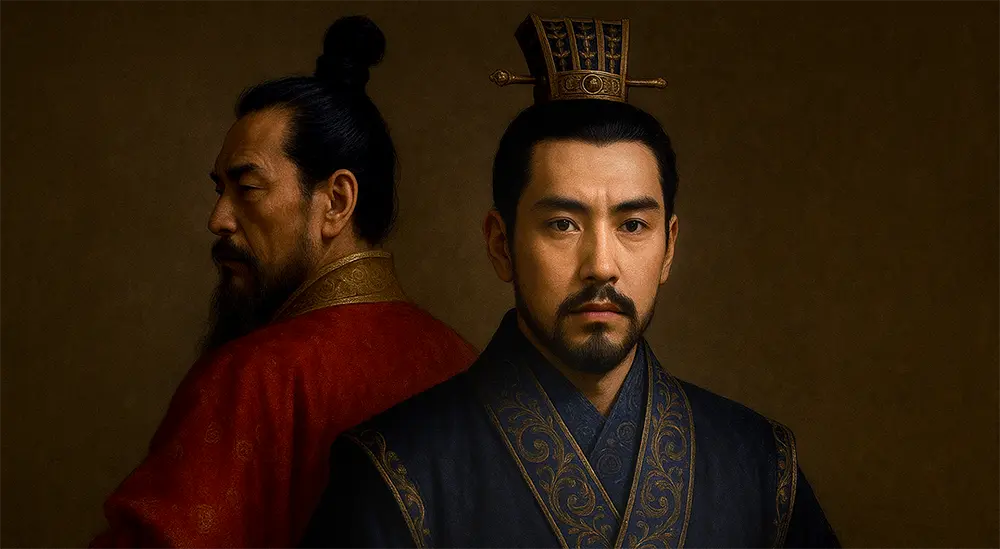
Another brilliant display of his cool thinking appears during Cao Pi’s Five-Route Invasion. After taking the Wei throne, Cao Pi orders five separate attacks on Shu, hoping to crush the weakened kingdom from every direction. Zhuge Liang stays composed and answers each threat with the right move.
On the western frontier, the Qiang leader Kebi Neng turns back the moment he hears that Ma Chao is guarding the passes. In the south, Wei Yan quickly contains Meng Huo’s restless rebels. At Shangyong, Li Yan, who is sworn brothers with Meng Da, convinces him to fake illness and withdraw. In the north, Zhao Yun uses drums, banners, and false camps to fool Cao Zhen into thinking Shu’s army is larger than it is. And to the east, Deng Zhi works his diplomatic charm to keep Wu from joining the invasion.
The entire offensive falls apart without a real fight. Five armies set out, and five return home defeated by patience, planning, and psychology. Zhuge Liang wins not through power or luck, but through understanding of people, of timing, and of fear itself.
Across these tales, Luo Guanzhong turns intellect into serenity. Zhuge Liang’s victories are less about cunning tricks than about emotional control, a steady hand steering through storms while others lose their nerve.
When wisdom failed
Even a legend must stumble, and Luo Guanzhong does not shy away from showing Zhuge Liang’s human side. His failures in the novel are not acts of folly, but lessons in the cost of perfection.
The loss at Jieting stands as his greatest wound. Defying Liu Bei’s dying advice never to entrust Ma Su with heavy responsibility, Zhuge Liang gives the young officer command of a crucial defensive post. Ma Su, full of theory but lacking experience, chooses to camp on high ground away from water, a decision that ends in disaster. When the position collapses, Zhuge Liang accepts full blame. He orders Ma Su’s execution with tears in his eyes, mourning not only a friend’s failure but his own lapse in judgment. In that single act, the novel reminds us that even wisdom cannot escape the pain of trust betrayed.
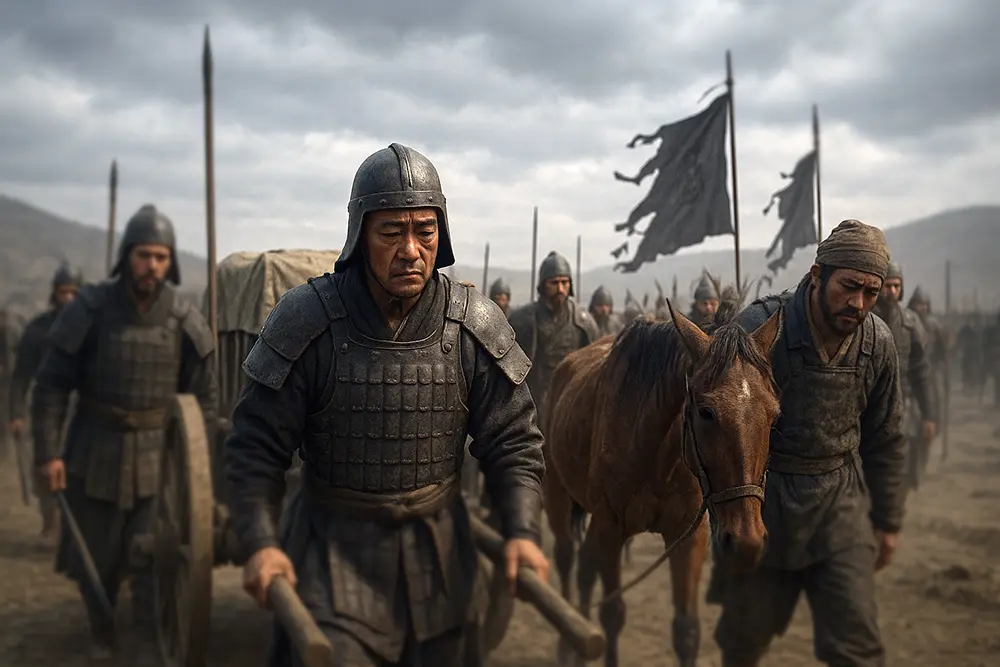
His Northern Expeditions, too, reveal the limits of even the sharpest mind. Zhuge Liang launches campaign after campaign against Wei, each driven by loyalty to his late lord Liu Bei’s dream of Han restoration. Yet each ends in stalemate. His strategies are flawless, his discipline legendary, but the heavens do not bend. These failures feel less like military defeats and more like meditations on fate, the tragedy of intellect constrained by circumstance.
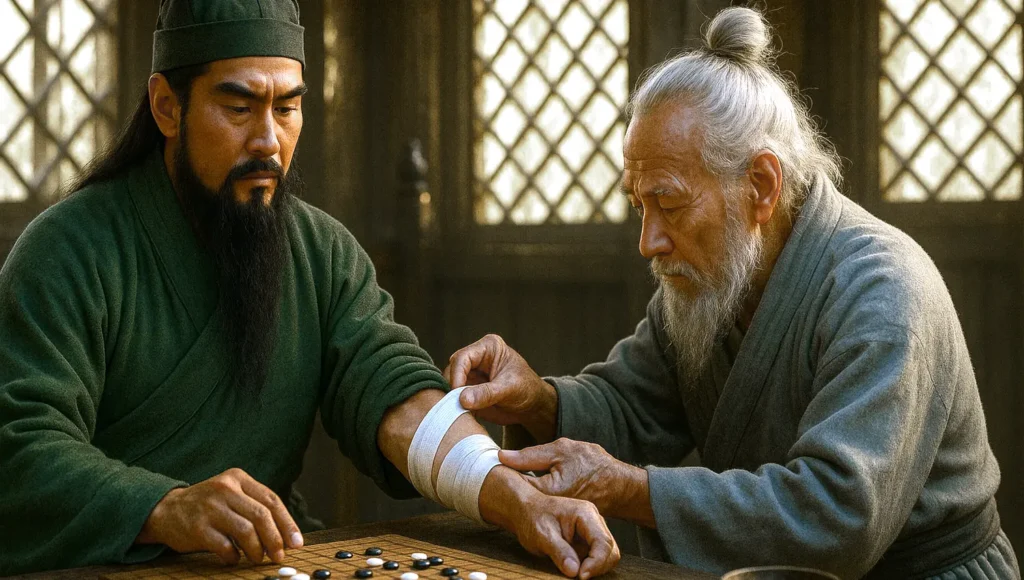
Then there is the Wei Yan affair, one of the novel’s most tragic and misunderstood subplots. Wei Yan was bold, outspoken, and fiercely confident, the kind of general every ambitious state needs, but few rulers can tolerate for long. His fiery temperament clashed with Zhuge Liang’s patience, yet his talent was undeniable. Throughout the Northern campaigns, Zhuge Liang continued to entrust him with key military roles, a sign of cautious respect rather than distrust.
But tension simmered between Wei Yan and the bureaucrat Yang Yi, a loyal but narrow-minded administrator. Wei Yan’s decisiveness and disdain for hierarchy often offended Yang Yi’s sense of order. Zhuge Liang knew of their feud, yet chose to ignore it, trusting that discipline and shared loyalty to Shu would hold them together. It was a calculated compromise, but one that would later unravel.
After Zhuge Liang’s death at Wuzhang Plains, that fragile balance collapsed. Yang Yi attempted to withdraw the army as instructed by Zhuge Liang’s final orders, while Wei Yan insisted they should press the attack. Accusations of treachery followed. Declared a rebel, Wei Yan fled and was killed by his own subordinate.
In the Romance of the Three Kingdoms, this outcome feels both inevitable and heartbreaking. Zhuge Liang had foreseen the danger yet chose tolerance over division. His failure wasn’t a lack of insight, but an excess of faith, faith that reason alone could keep flawed men in harmony. In death, his wisdom no longer bridged their pride, and chaos reclaimed what discipline once restrained.
The enduring lesson of the Sleeping Dragon
Zhuge Liang’s legend endures not because he always triumphed, but because he never surrendered his ideals. His best strategies reveal the beauty of reason; his worst, the price of conviction. Together, they form the portrait of a man who stood between chaos and order, holding the line with intellect alone.
To the reader of Romance of the Three Kingdoms, Zhuge Liang represents the conscience of an era. He fights not for conquest, but restoration. He governs not for power, but harmony. Even in failure, he remains composed, loyal, and incorruptible, the embodiment of the virtue Luo Guanzhong wished his age could reclaim.
The genius of the “Sleeping Dragon” lies in this balance between brilliance and burden. He could manipulate the enemy’s fear, but never his own conscience. He could win the respect of rivals, but not the mercy of fate. His victories were intellectual; his losses, profoundly human.
In a world of ambition and betrayal, Zhuge Liang’s legacy reminds us that the truest form of strategy is not the art of war, but the art of staying righteous when surrounded by it.
Discover our recent stories


 Reflections
Cao Pi: Leading in the shadow of Cao Cao