Stratagems
Lu Xun’s fire attack at Yiling: How patience defeated vengeance
Learn how Lu Xun, once doubted for his youth, turned patience into a weapon at Yiling, unleashing a fire attack that destroyed Liu Bei’s army and reshaped the Three Kingdoms.

Rayden C
September 1, 2025 — 8 minutes read
In the Romance of the Three Kingdoms, few battles demonstrate the difference between emotion and calculation as clearly as the Battle of Yiling. In 222 CE, Liu Bei led an army east to avenge his sworn brother Guan Yu, only to face an opponent who fought with time, terrain, and restraint.
Lu Xun’s victory at Yiling is remembered not just for the flames that consumed Shu’s army, but for the discipline that made those flames possible. The young general of Eastern Wu turned patience into a weapon, showing that in warfare and leadership, calm minds often outlast furious ones.
The weight of vengeance
Liu Bei’s campaign against Eastern Wu began as an act of loyalty but evolved into one of self-destruction. Guan Yu’s capture and execution by Sun Quan’s forces had deeply wounded the brotherhood that defined Shu’s identity. Grief turned to rage, and rage turned to action.
Against the advice of his ministers, Liu Bei assembled a vast army and marched east. In the novel, his determination carried moral weight, as he repaid blood with blood, yet it also marked the beginning of his decline. His focus shifted from restoring the Han to avenging a personal loss.
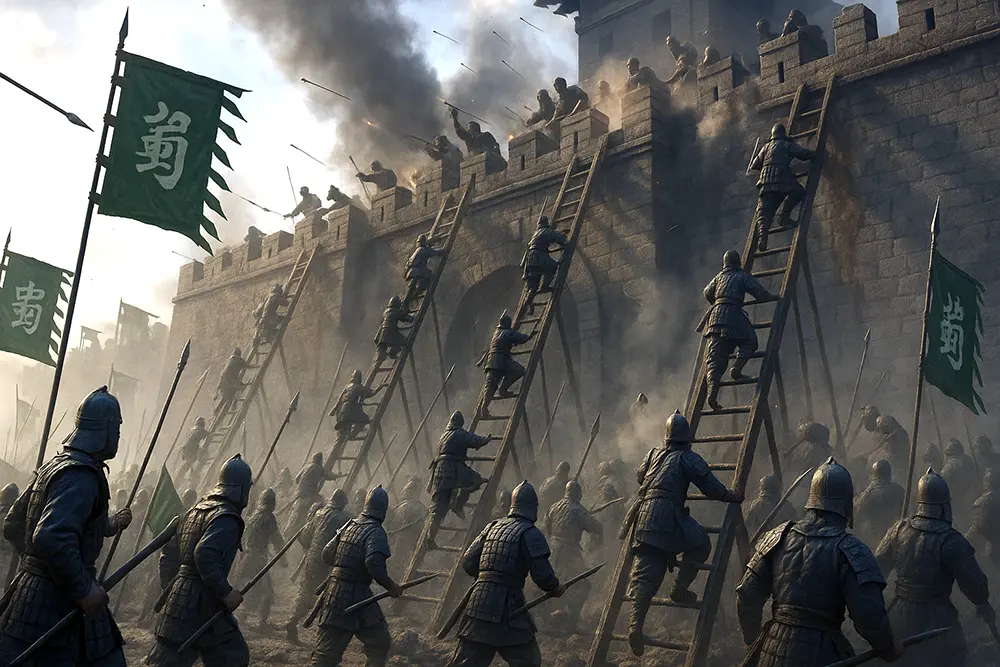
This emotional imbalance is what Lu Xun immediately recognized. The Wu commander understood that Liu Bei’s strength lay in unity and moral purpose; without it, his leadership became impulsive. To fight such an opponent, Lu Xun didn’t need a bold ambush; he needed to let emotion undo itself.
The young commander who waited
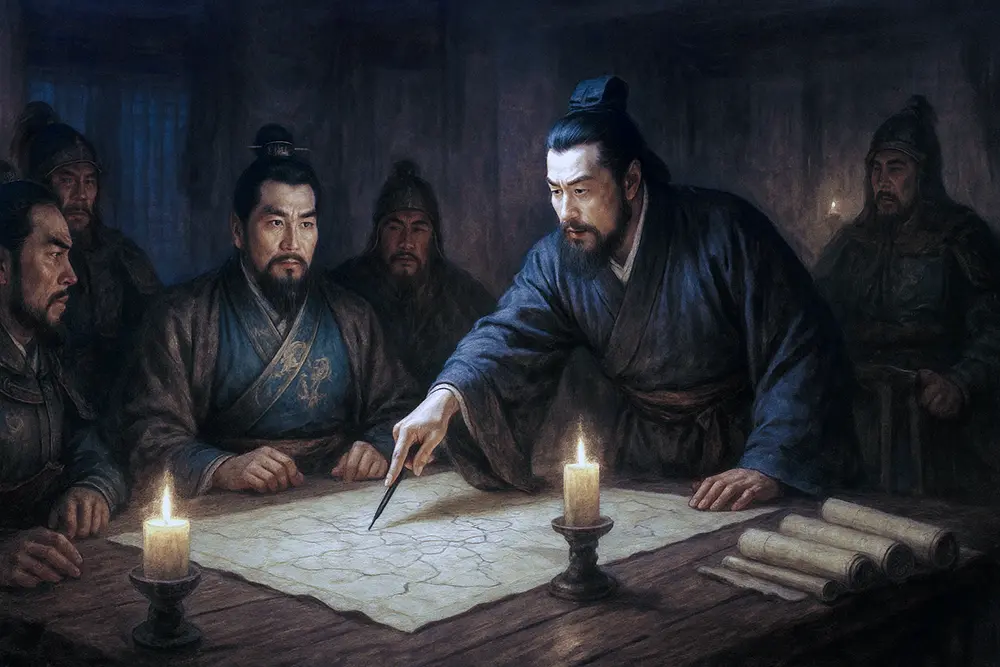
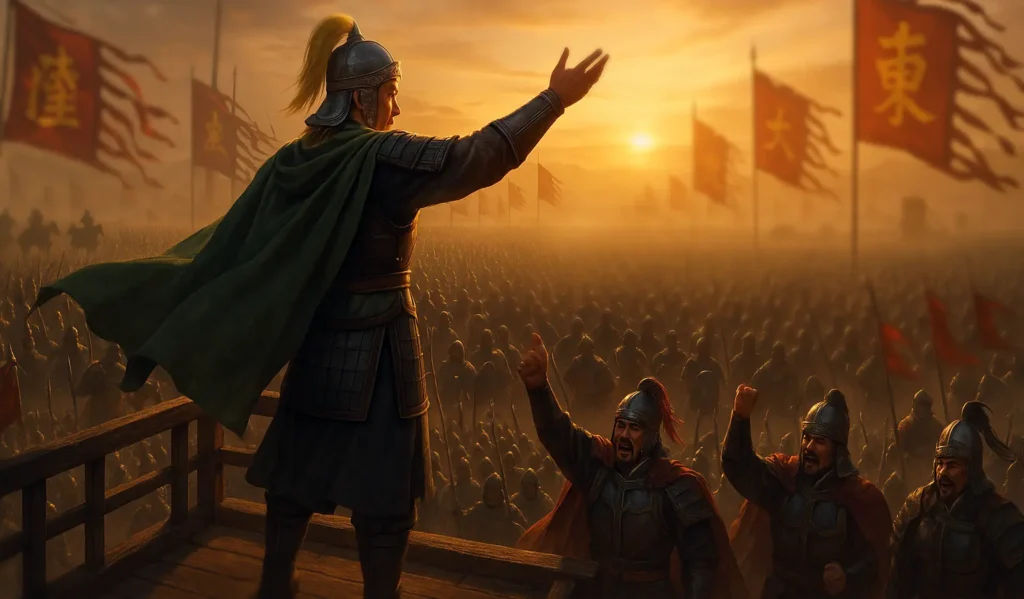
When Sun Quan appointed Lu Xun as supreme commander, Wu’s officers were unconvinced. Lu Xun was barely thirty, a man of letters more than of scars, and the veterans under him had once served Zhou Yu and Lü Meng. Facing a seasoned warlord like Liu Bei, they expected an immediate defence.
Instead, Lu Xun ordered caution. He withdrew when pressed, fortified when threatened, and refused to meet Liu Bei in open battle. To his peers, it seemed like cowardice. To Sun Quan, it was exactly what Wu needed, a commander who could endure criticism without losing composure.
Liu Bei, meanwhile, misread this silence as fear. He advanced deeper into Wu territory and stretched his forces thin across the hills near Yiling, dividing his army into dozens of camps. The terrain was forested and dry, the summer heat unrelenting. Shu’s men grew weary under the conditions, and the morale that began in righteousness began to waver.
Lu Xun saw everything he needed. Every day that passed was a day closer to the moment when nature, not numbers, would decide the outcome.
When time becomes a weapon
Patience is rarely celebrated in warfare, yet it was Lu Xun’s most decisive move. For months, he ignored provocation and insults alike. When his officers demanded he act, he famously replied that it was not the time to fight.
This was not passivity but a calculation of rhythm. The forests were dense, the winds strong, and the enemy overextended. To strike early would be to play into Liu Bei’s narrative of revenge. To wait was to rewrite it.
By holding his army intact and allowing Liu Bei’s to deteriorate, Lu Xun turned time itself into a force multiplier. His soldiers rested in the shade while Shu’s troops endured heat and fatigue. When the opportunity finally ripened, the forest dry, the wind high, and the Shu camps complacent, he moved with precision.
The order was simple: attack with fire.
The fire attack at Yiling
The Romance of the Three Kingdoms gives Lu Xun’s fire attack a tone of inevitability, as if the world itself had been waiting for the command.
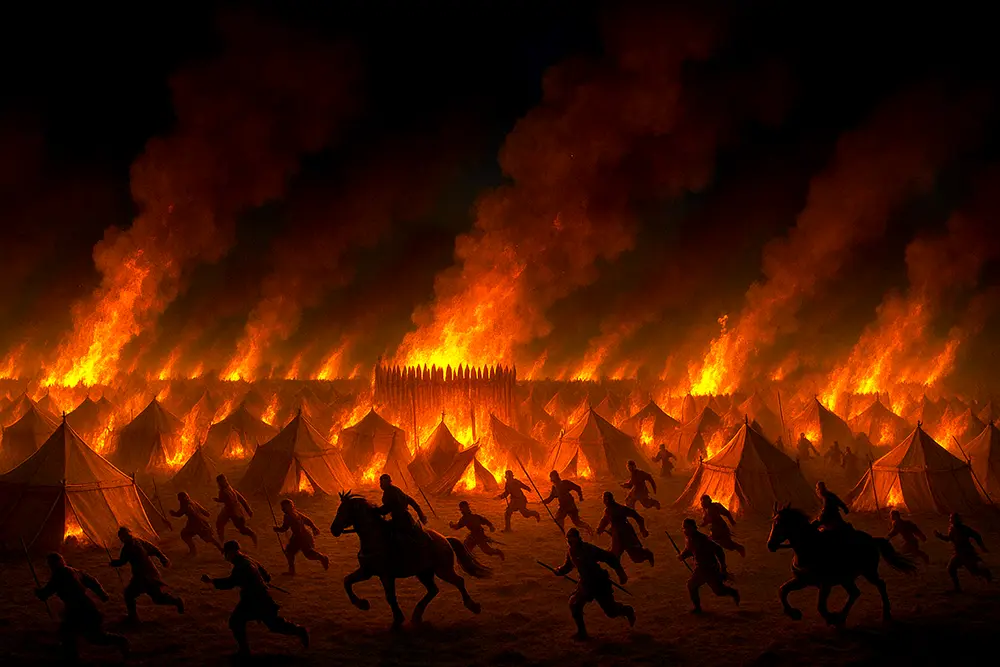
At dusk, Wu soldiers launched flaming arrows and torches into the forests surrounding Shu’s camps. Carried by the wind, the fires spread rapidly. Tents, wagons, and supplies were repurposed as fuel.
The chaos that followed was complete. Liu Bei’s men, unprepared for a sudden assault in the heat of summer, panicked as smoke filled the valleys. Communication broke down, and the army’s vast numbers became a disadvantage; the more they moved, the faster the flames consumed them.
By dawn, Shu’s army was shattered. Those who escaped did so in disarray, and Liu Bei himself narrowly avoided capture. The same campaign that began in loyalty ended in ruin.
What made the victory remarkable was not the fire itself, but the decision behind it. Lu Xun had waited for the world to align weather, terrain, and enemy behaviour before committing a single decisive strike. It was a strategy guided by observation, not impulse.
The psychology of restraint
Yiling stands out among the great battles of Romance of the Three Kingdoms because it embodies psychological warfare more than physical confrontation.
Lu Xun’s approach demonstrated an understanding of human behaviour that transcended tactics. He recognised that an enemy ruled by emotion would eventually expose himself.
Every delay he imposed, every day he refused to fight, deepened Liu Bei’s frustration. The longer the waiting, the more unbalanced the Shu camp became. By the time the fire attack began, the battle was already lost in spirit.
In contrast, Lu Xun’s demeanour remained detached. He didn’t seek validation through early success, nor did he respond to ridicule. His composure disarmed both his allies’ doubts and his enemy’s aggression. In doing so, he proved that control of self and circumstance is the highest form of command.
Aftermath: The fall of Shu’s fury
Liu Bei retreated to Baidicheng after the disaster at Yiling. His army destroyed, his pride wounded, he fell ill and never recovered.
In the novel, his death is portrayed as both physical and moral exhaustion — the cost of allowing emotion to rule reason. His passing marks the end of Shu’s unity and the beginning of its decline.
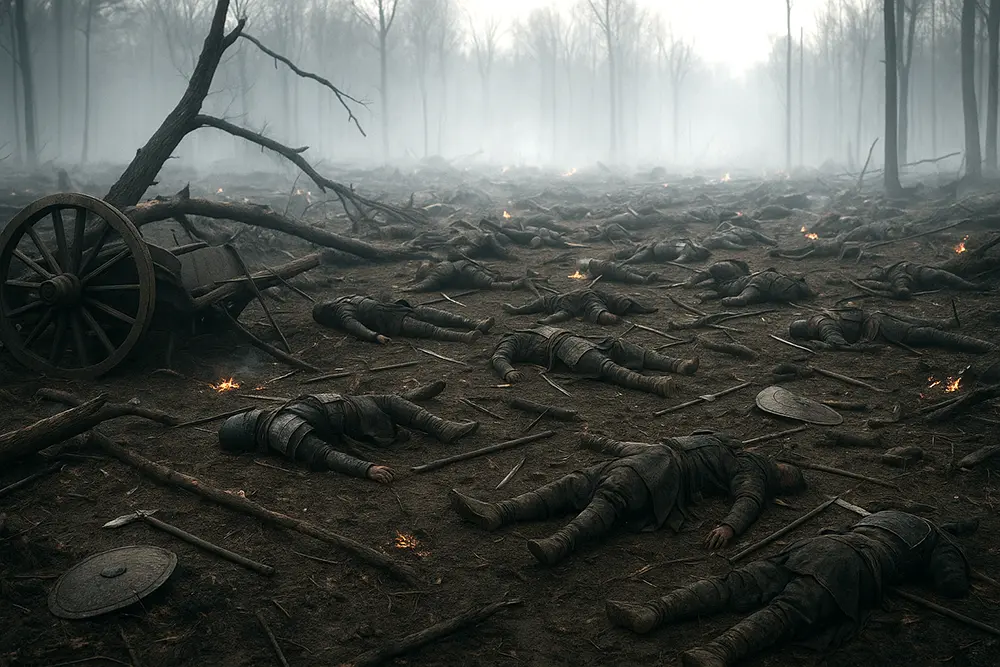
For Eastern Wu, Yiling was more than a military triumph; it was a validation of Sun Quan’s judgment and Lu Xun’s strategic philosophy. The young commander’s patience had preserved Wu’s independence at a moment when it faced annihilation.
Lu Xun rose to prominence as one of the state’s most trusted leaders. Yet he remained characteristically humble, attributing the victory to timing and environment rather than personal genius. It was this attitude, calm amid glory, that defined his legacy long after the fires of Yiling were gone.
A stratagem of the mind
The fire attack at Yiling is often remembered as a dramatic turning point, but its real significance lies in what it reveals about leadership.
Lu Xun’s approach embodied a form of intellectual warfare, victory achieved through understanding, not domination.
His stratagem rested on four key principles:
- Wait for imbalance. The enemy’s emotion, not his army, was the actual target.
- Let nature assist. Terrain, weather, and timing can accomplish what force cannot.
- Control perception. Appear weak to make the opponent careless.
- Strike once, decisively. The best strategy is one that ends the battle before it begins.
Each principle reflects a central theme of Romance of the Three Kingdoms: that wisdom and restraint carry greater weight than valour and vengeance. The novel uses Lu Xun’s victory not just to mark the decline of Liu Bei, but to illustrate the danger of losing composure, a lesson echoed in countless characters throughout the saga.
The legacy of Yiling
Lu Xun’s name rarely appears in the same breath as Zhuge Liang or Cao Cao, yet his victory at Yiling stands among the most intellectually elegant feats in the novel. It is a reminder that strategy is not only about brilliance but about balance, the ability to see when others act blindly.
His fire attack wasn’t born of luck or recklessness. It was the endpoint of observation, discipline, and timing. In a story filled with ambition and betrayal, Lu Xun represents a quieter form of power: leadership through control, not chaos.
The flames that consumed Liu Bei’s army were not simply the product of fire; they were the result of one man’s refusal to rush. At Yiling, patience didn’t just win a battle. It defined a philosophy.
Discover our recent stories


 Reflections
Cao Pi: Leading in the shadow of Cao Cao