Reflections
Lu Su: The diplomat who shaped Wu’s destiny
Discover the story of Lu Su, the overlooked diplomat of the Three Kingdoms whose diplomacy shaped Eastern Wu’s survival, forged the Red Cliffs alliance, and left lessons in strategy and leadership.

Rayden C
September 8, 2025 — 6 minutes read
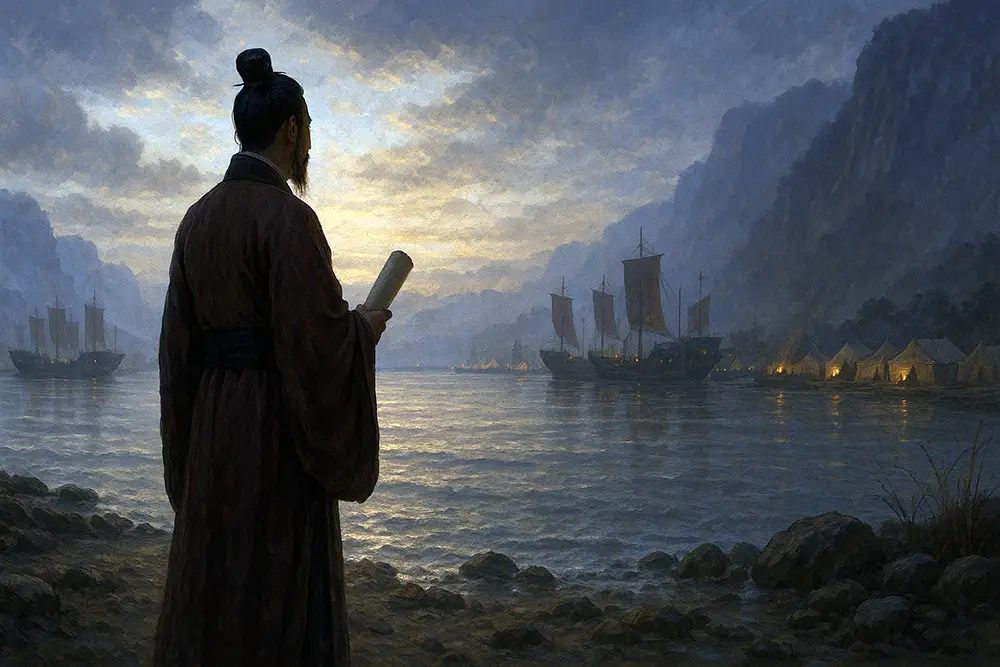
Lu Su was no warrior-poet, no master of trickery, and no towering warlord. He was a statesman with a calm presence, an eye for balance, and the rare ability to persuade stubborn men toward cooperation. While others carved their names into history with swords, Lu Su shaped the destiny of Wu with words.
A leader in waiting
Lu Su was born into a wealthy family in the late Eastern Han dynasty. Unlike the rough warriors or cunning schemers who often populate the pages of Romance of the Three Kingdoms, Lu Su stood out as a man of education, calm temperament, and expansive thinking.
When chaos erupted after Dong Zhuo’s coup and the empire fractured, Lu Su aligned himself with Sun Ce and later Sun Quan. But unlike the many generals who served the Sun family, his greatest contribution wasn’t martial, it was diplomatic and strategic. At a time when Wu was still a fledgling state, surrounded by giants, Lu Su’s voice gave Sun Quan options beyond mere survival.
Red Cliffs: The unseen hand
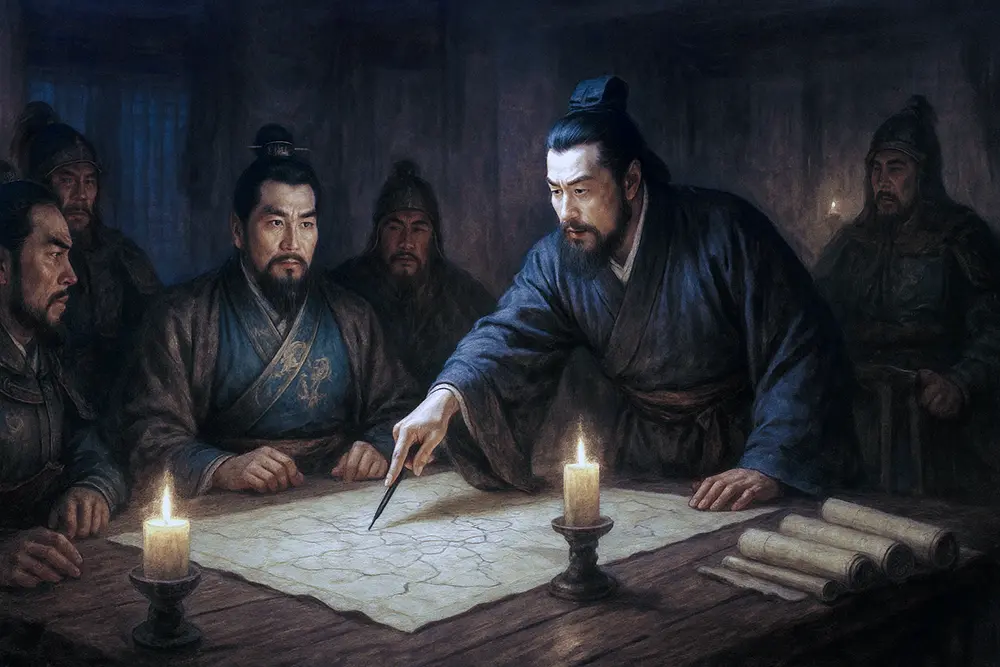
The Battle of Red Cliffs is one of the most famous clashes in Chinese history, a turning point where Cao Cao’s seemingly unstoppable advance was halted by the combined forces of Liu Bei and Sun Quan. Zhuge Liang often takes the credit in popular imagination, but Lu Su was the architect who laid the groundwork for that alliance.
Sun Quan faced enormous pressure. Cao Cao had marched south with a colossal army, demanding submission. Many of Sun Quan’s advisors urged surrender, believing resistance was futile. Even his mother, Lady Wu, reportedly leaned toward caution.
Lu Su, however, urged a bolder path. He saw that yielding to Cao Cao would mean the slow strangulation of Wu’s autonomy. He also understood that Liu Bei, though battered and wandering after losing Jing Province, was the only potential ally who could help Wu resist. Lu Su persuaded Sun Quan to stand firm and to welcome Liu Bei into the fold, creating the coalition that made Red Cliffs possible.
Without Lu Su’s steady counsel, Wu may have capitulated, and the entire story of the Three Kingdoms might have ended before it began.
The keeper of balance
After Red Cliffs, the alliance between Wu and Shu was uneasy. Both states coveted Jing Province, a strategically vital region along the Yangtze. Liu Bei wanted it as a base, while Sun Quan saw it as his rightful inheritance.
Here again, Lu Su played peacemaker. He convinced Sun Quan to allow Liu Bei temporary control of the territory, framing it as a loan until Liu Bei could secure his own lands in the west. It was a risky compromise, but it bought Wu valuable breathing room and maintained the alliance long enough for Liu Bei to establish himself in Sichuan.
This diplomatic balancing act reveals Lu Su’s vision. He wasn’t naive, he knew Liu Bei would be reluctant to return Jing but he also understood the alternative. If Wu had clashed prematurely with Shu, Cao Cao would have been the only winner. Lu Su’s pragmatism held the alliance together during its most fragile phase.
A different kind of hero
What sets Lu Su apart from other figures of the era is not just his diplomacy, but his integrity. In an age filled with betrayals and shifting allegiances, Lu Su remained consistently loyal to Sun Quan and consistently committed to the bigger picture.
Even Zhuge Liang, whose brilliance often overshadows contemporaries, respected Lu Su as a trustworthy partner. Their recorded conversations show mutual admiration, even as their states eyed each other with suspicion.
In contrast to the scheming of men like Jia Xu or the ruthlessness of generals like Lü Bu, Lu Su embodied a steadier, quieter form of leadership. He believed in long-term stability over short-term gain, a philosophy that helped Wu survive in a world of endless war.
Lessons for today
Lu Su’s story might be centuries old, but it carries lessons that feel surprisingly modern.
- Diplomacy is strategy. In business, politics, or personal life, forging alliances and knowing when to compromise can be as decisive as direct confrontation.
- Courage isn’t always martial. It took immense bravery for Lu Su to stand against advisors urging surrender to Cao Cao, and to convince Sun Quan to gamble on Liu Bei. Sometimes, courage means persuading others to choose the harder path.
- Integrity builds trust. Lu Su’s reputation as honest and reliable allowed him to serve as mediator in tense negotiations. Trust, once earned, becomes its own kind of power.
- Big picture thinking matters. Lu Su didn’t just react to immediate crises; he saw the long-term trajectory of Wu’s survival and tailored his actions to fit that vision.
In our modern world where negotiation, coalition-building, and balancing interests often decide outcomes more than brute force, Lu Su’s approach feels more relevant than ever.
The tragedy of an early death
Lu Su died young, in his mid-40s, leaving Sun Quan bereft of a stabilizing influence. After his death, relations between Wu and Shu deteriorated, eventually leading to the tragic battle at Yiling, where Lu Xun defeated Liu Bei in flames. One can’t help but wonder: had Lu Su lived longer, could he have preserved the alliance, or at least delayed the conflict that consumed two of Cao Wei’s greatest rivals?
History doesn’t grant us answers, but it does highlight his absence. Wu would go on to survive for decades, but without Lu Su’s diplomacy, it often felt more precarious, more reliant on force than balance.
Remembering Lu Su
Lu Su rarely gets the same recognition as the generals who charged into battle or the strategists who devised dazzling schemes. Yet, his fingerprints are on some of the most decisive events of the Three Kingdoms era. Without him, there might have been no united front at Red Cliffs, no breathing space for Wu, and perhaps no prolonged Three Kingdoms at all.
He was, in many ways, the kind of leader history too often overlooks: not the loudest voice, nor the most flamboyant character, but the steady hand guiding his state through storms. In remembering Lu Su, we’re reminded that destiny is often shaped not just by warriors, but by the quiet diplomats who convince leaders to take the right risks.
Discover our recent stories


 Reflections
Cao Pi: Leading in the shadow of Cao Cao