Reflections
How Yuan Shao’s indecision mirrors Trump’s tariff uncertainty
Discover how Yuan Shao’s indecision at Guandu mirrors Donald Trump’s 2025 tariff uncertainty, a timeless lesson on power and leadership.

Rayden C
October 4, 2025 — 7 minutes read
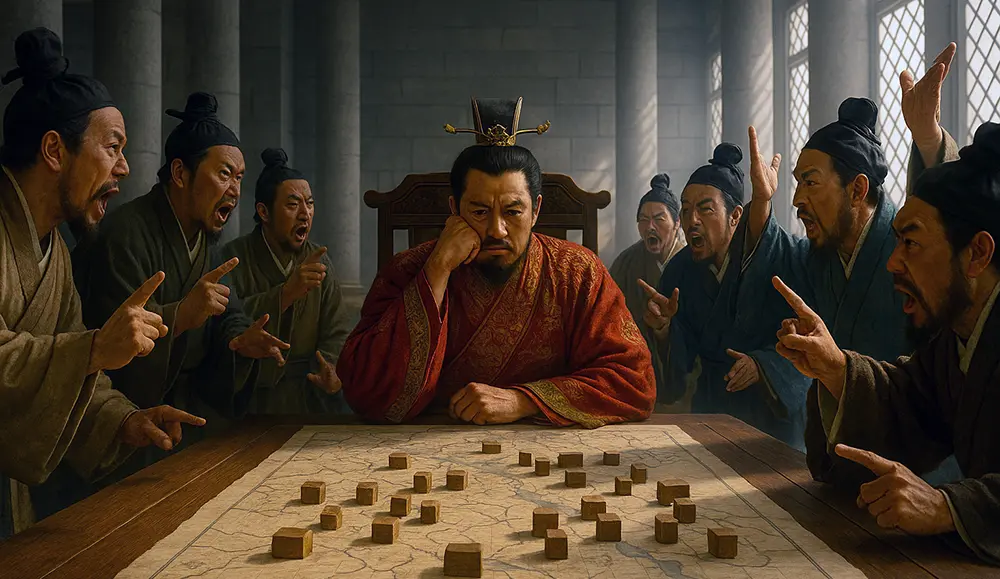
Yuan Shao: Power without direction
In the chaotic twilight of the Eastern Han dynasty, few warlords looked as formidable as Yuan Shao. He had everything a man needed to dominate the fractured empire. His family name was one of prestige, stretching back four generations of high-ranking officials. He controlled the fertile Hebei region in the north, home to rich farmlands and a massive pool of manpower. His armies were said to number in the hundreds of thousands, and noble families flocked to his banner. On paper, Yuan Shao was the strongest contender for unifying northern China.
Yet, history does not remember him as a victor. Instead, Yuan Shao is recalled as the man who squandered his advantages through indecision. Where others struck boldly, he paused. Where others committed to a path, he wavered. Despite commanding immense resources, Yuan Shao failed to translate potential into lasting triumph. His story shows us that leadership isn’t just about what you hold in your hands, it’s about how you use it.
The Battle of Guandu: A missed opportunity
The year 200 CE gave Yuan Shao his greatest chance to crush his rival, Cao Cao. At the Battle of Guandu, Yuan Shao’s armies dwarfed Cao Cao’s. Many historians estimate that Yuan Shao had nearly ten times the manpower. He had the momentum, he had the supplies, and he had the prestige.
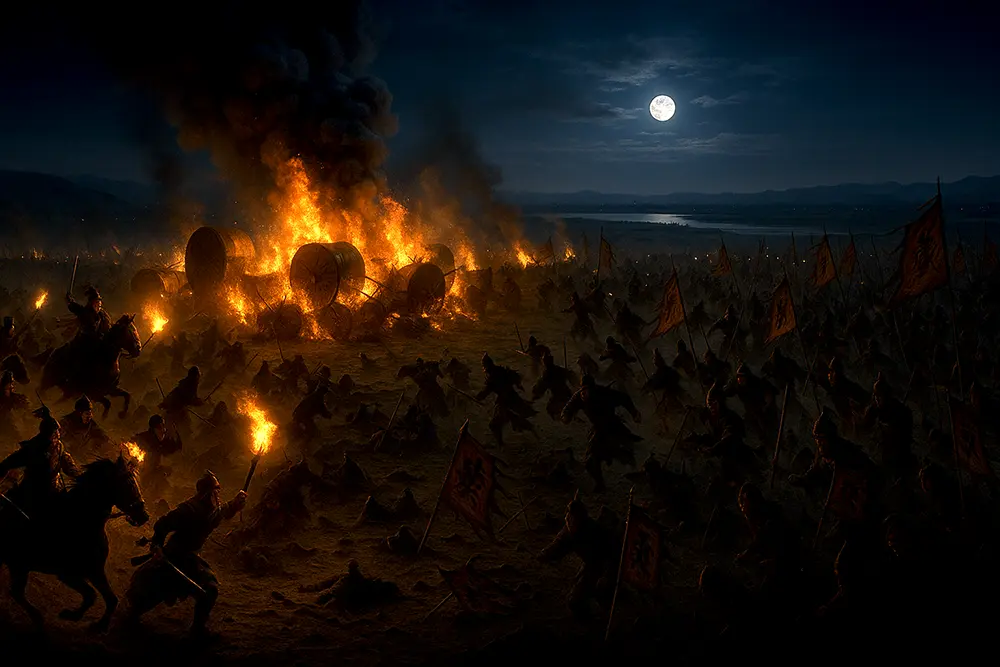
Yet, when opportunity knocked, Yuan Shao failed to open the door. His advisors urged him to strike at Cao Cao’s vulnerable supply lines early. He delayed, debating among conflicting opinions. Later, when Cao Cao launched a daring raid against Yuan Shao’s supply depot at Wuchao, Yuan Shao hesitated yet again. Instead of responding swiftly, he allowed confusion to spread through his camp. By the time he acted, the damage was irreversible. His soldiers, deprived of grain, broke into disorder. The mighty army crumbled not because of lack of strength, but because of lack of decisiveness.
Guandu became the turning point. Cao Cao, despite being outnumbered, rose in power, while Yuan Shao’s fortunes spiraled downward. The lesson is simple but eternal: overwhelming resources are useless if leaders cannot decide when and how to use them.
The nature of indecision in leadership
Indecision is one of the most insidious weaknesses in leadership. It doesn’t always look dramatic, there is no single blunder to point at. Instead, it creeps in through hesitation, second-guessing, and half-measures. Leaders with vast resources often fall victim to this because they fear squandering their advantages. Ironically, the very abundance that should empower them becomes a source of paralysis.
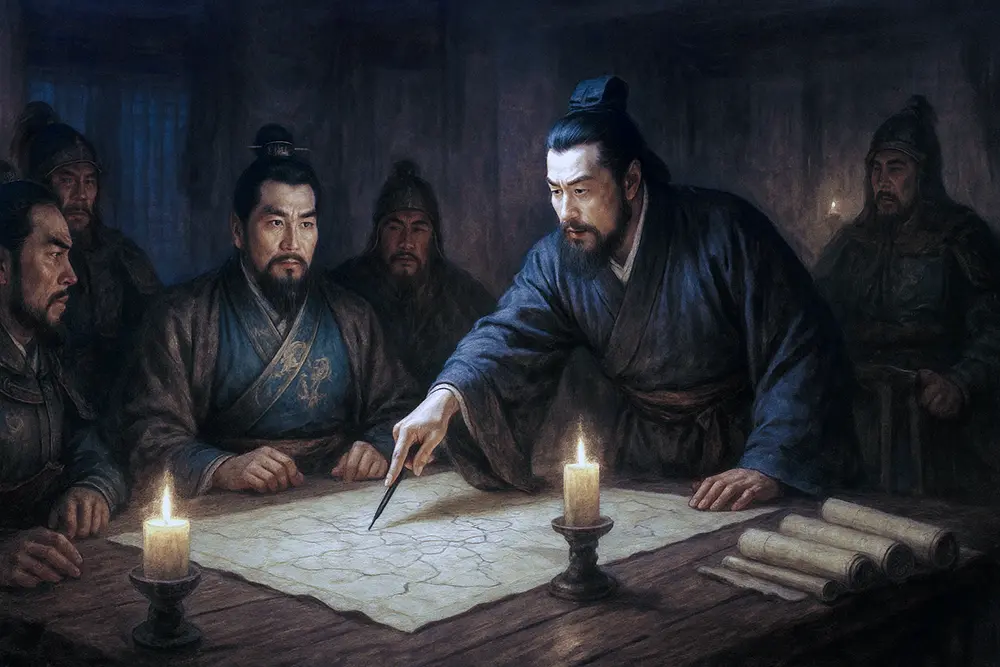
Yuan Shao’s indecision was legendary. His councils of war became endless debates. Advisors offered bold strategies, but Yuan Shao either dismissed them, delayed too long, or reversed his orders halfway. His men grew restless, sensing their leader’s uncertainty. Meanwhile, Cao Cao seized the initiative, turning weaknesses into strengths.
The same principle applies in modern contexts. Followers, whether soldiers, employees, or entire nations — crave clarity. Indecision erodes morale and confidence. Rivals, on the other hand, thrive when their opponents cannot commit. It is not always the strongest or wealthiest who prevail, but those who act with consistency and resolve.
Trump’s tariff gamble in 2025
Fast forward to the modern era, and we find a striking echo in Donald Trump’s 2025 tariff policy. Like Yuan Shao, Trump commanded immense resources. The United States, with its vast economy and global influence, held the ability to reshape international trade. Tariffs could have been wielded as a sharp tool, protecting domestic industries, forcing rivals to negotiate, and signaling strength.
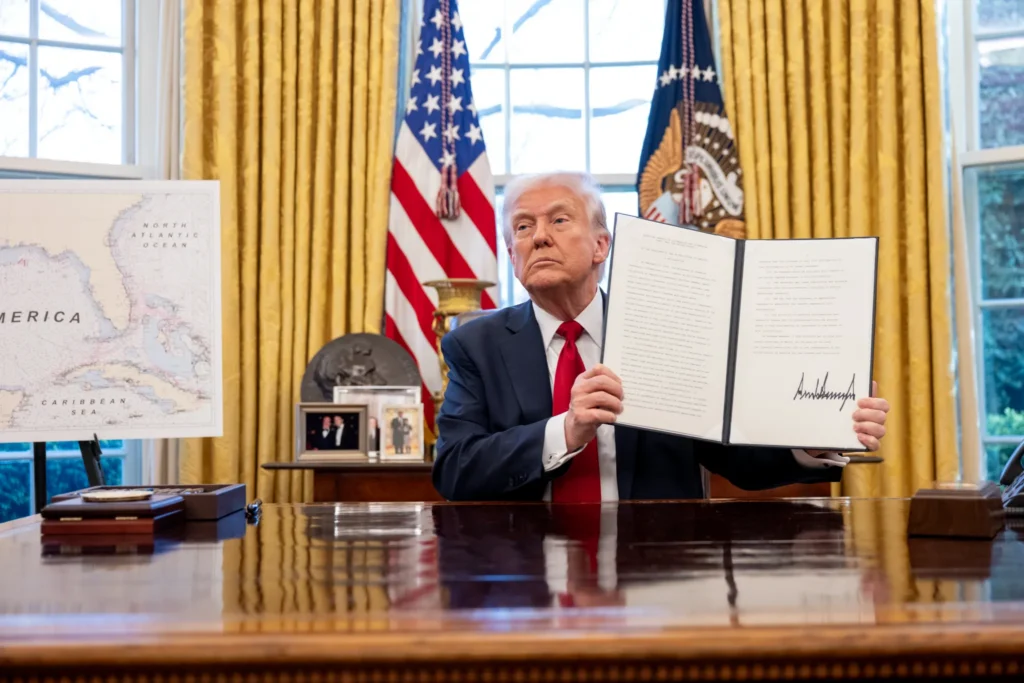
On April 2, 2025, Trump announced what seemed like a bold, simple move: a 10 percent baseline tariff on imports from all countries, with higher “reciprocal” rates for those deemed unfair. It sounded decisive. For a brief moment, it appeared as though America had drawn a firm line.
But as the weeks rolled on, clarity gave way to uncertainty. Tariffs were modified, exemptions granted, and carve-outs appeared for favored industries. In July, the schedule shifted again, with some reciprocal rates raised and others softened. By August, the administration ended de minimis treatment for many low-value imports, throwing global shipping into disarray. Allies like Canada and the EU struggled to understand where they stood. Businesses didn’t know whether to adjust supply chains permanently or wait for the next revision.
The bold sword of tariffs became a pendulum, swinging back and forth. Much like Yuan Shao’s war councils, what began as strength was blunted by hesitation and inconsistency.
Markets and allies in limbo
Indecision always creates collateral damage, and in 2025, it was businesses, markets, and allies who bore the brunt. Farmers didn’t know whether their crops would find markets abroad. Manufacturers worried about unpredictable input costs. Shipping companies scrambled as postal flows collapsed under the de minimis changes.
Allies, too, were left confused. Was America’s stance firm, or would exemptions come and go with little warning? Rivals, meanwhile, adjusted calmly. China expanded alternative supply routes. The European Union strengthened internal trade mechanisms. Just as Cao Cao thrived on Yuan Shao’s hesitation, America’s rivals adapted to Trump’s wavering tariff stance.
The parallel is almost uncanny. Yuan Shao’s soldiers, once proud and confident, lost faith as their leader dithered. Trump’s tariffs, instead of cementing America’s dominance, injected uncertainty into the very system they sought to control. Power was not lacking; but consistency was.
Why decisiveness outweighs size
The stories of Yuan Shao and Trump remind us of a timeless truth: decisiveness matters more than size. Yuan Shao had the larger army, but it was Cao Cao’s swift and bold decisions that carried the day. Trump had the world’s largest economy at his back, yet rivals endured by simply waiting out his shifting policies.
A flawed but consistent strategy can still succeed. A perfect but unstable one usually fails. Leaders who act decisively set the tempo, forcing rivals to react. Leaders who hesitate surrender initiative. In warfare, that can mean defeat. In trade, it can mean loss of credibility, weakened alliances, and wasted leverage.
Cao Cao’s brilliance lay not just in cunning tactics, but in his willingness to decide and move forward, even with risks. That clarity inspired loyalty and allowed him to turn disadvantage into opportunity. America’s tariffs, by contrast, illustrate how inconsistency weakens even the strongest hand.
Lessons across time
So, what can we learn from this echo between ancient China and modern America? First, clarity creates credibility. Yuan Shao’s indecision eroded trust among his soldiers, just as Trump’s tariff swings eroded trust among allies and businesses. Second, resources require direction. An army or an economy is only as effective as the leadership guiding it. Third, hesitation breeds defeat. Delays give opponents room to adapt, and rivals rarely waste such chances.
The lesson is timeless: power without decisiveness is power wasted. Yuan Shao lost his chance to dominate China not because he lacked strength, but because he could not commit. Trump’s tariffs, likewise, faltered not because America lacked leverage, but because the policy lacked consistency.
Whether on the battlefield of Guandu or the negotiating tables of Washington, the outcome is the same. Indecision costs victories. Leaders who hesitate risk watching their greatest advantages slip away. And history, with its merciless memory, rarely forgives those who had everything and lost it because they could not decide.
Discover our recent stories


 Reflections
Cao Pi: Leading in the shadow of Cao Cao