Stratagems
Zhang He’s retreat at Jieting
At Jieting, Zhang He turned Shu’s blunder into Wei’s advantage. His decision to halt pursuit shows how restraint, not recklessness, secured lasting victory.

Rayden C
September 29, 2025 — 6 minutes read
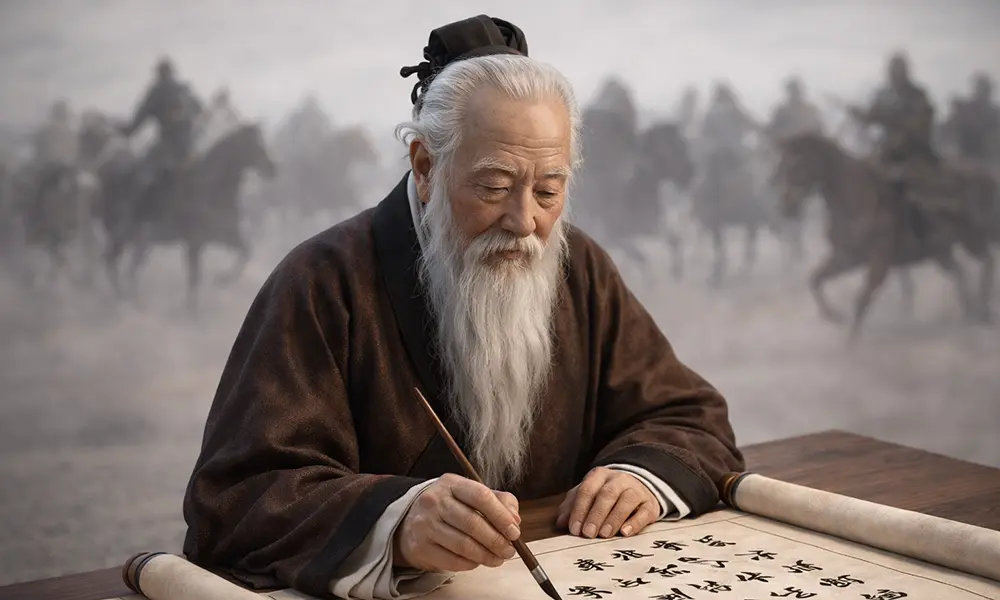
When the Northern Expeditions are retold, Jieting usually becomes a cautionary tale about Zhuge Liang’s trusted subordinate Ma Su. His refusal to follow orders, camping on high ground far from water, doomed Shu’s forward position and shattered Zhuge Liang’s carefully laid campaign. The spotlight shines on his blunder, on Zhuge Liang’s tears, and on the crushing disappointment of failure. But in the shadows of that story stands Zhang He, the Wei general who actually decided the battle’s outcome. His brilliance did not lie in chasing glory but in knowing when to stop.
The battle that should have been a rout
Zhang He was no stranger to war. By the time of Zhuge Liang’s first Northern Expedition in 228 CE, he had decades of experience under Cao Cao and later Cao Pi. He was known for agility and adaptability, qualities that made him a reliable commander. At Jieting, when Shu’s error became clear, Zhang He struck decisively.
Ma Su’s forces, cut off from water, collapsed quickly under Wei’s pressure. Shu’s troops scattered in chaos, and for a moment Zhang He stood on the edge of total victory. His officers clamored to press forward, to drive the retreating Shu forces into annihilation. After all, wasn’t this the moment to end Zhuge Liang’s ambitious campaign once and for all?
But Zhang He refused.
Why restraint was the harder choice
To many soldiers, pursuit was the obvious choice. To Zhang He, it was a trap, not because Zhuge Liang had laid an ambush at Jieting, but because the very conditions of victory made overextension dangerous. Several strategic considerations shaped his decision:
- Terrain and Logistics
Shu’s retreating army scattered through rugged terrain. Pursuing them meant long chases across valleys and mountains where supply lines would be stretched thin. A tired, hungry army is as vulnerable as one already defeated. - Zhuge Liang’s Presence
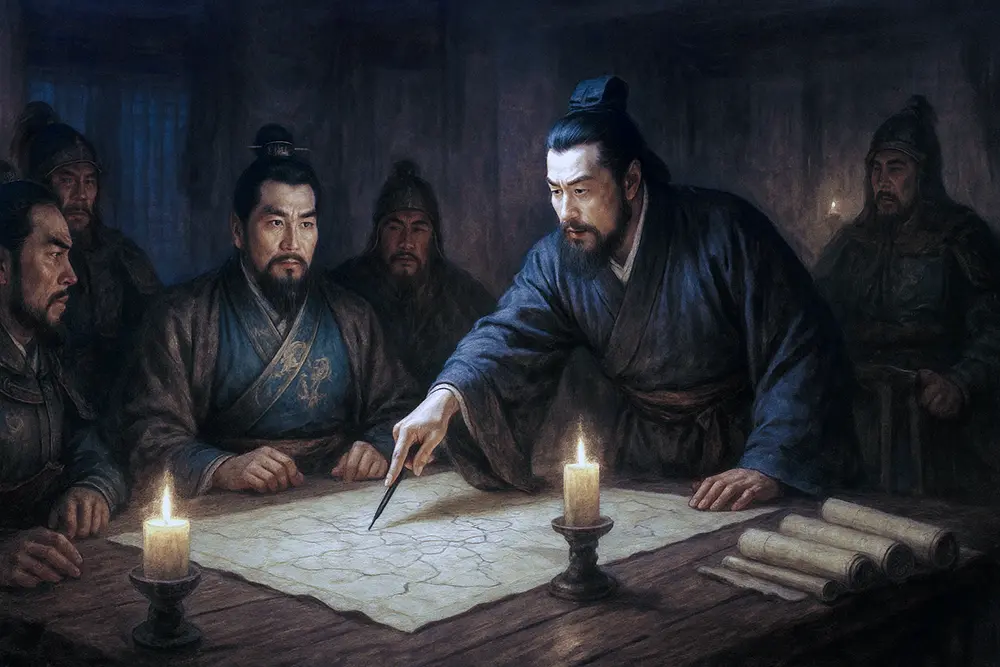
Though Ma Su failed, Zhuge Liang still commanded the broader campaign. He was no fool. If Zhang He had pursued recklessly, Zhuge Liang might have reorganized the retreat into a deadly counterstrike. The possibility alone was enough to caution a veteran like Zhang He. - Wei’s Strategic Position
Wei was the stronger state overall, but wars are not won by gambling unnecessarily. Zhang He knew his role was not to destroy Shu in one gamble but to maintain Wei’s advantage steadily. Eliminating Ma Su’s detachment had already achieved this. Why risk it? - The Temptation of Overconfidence
Victory intoxicates. Soldiers crave plunder, commanders crave fame. Zhang He resisted both. He was not fighting for himself but for Wei’s long-term survival. Overconfidence had undone countless generals in Chinese history, he refused to add his name to that list.
Victory in preservation
By halting pursuit, Zhang He preserved his army’s strength. Wei retained a disciplined force ready to defend against the next strike, rather than an exhausted one vulnerable in enemy territory. More importantly, he denied Zhuge Liang the chance to flip disaster into opportunity.
This is the essence of strategic restraint: recognizing that the greatest victory is not the destruction of an enemy, but the preservation of one’s own capacity to fight again. In contrast, had Zhang He pressed recklessly, even a minor counterstrike from Shu could have cost Wei dearly. His judgment ensured that the momentum of Wei remained intact while Shu’s grand offensive collapsed into ashes.
The strategic philosophy of restraint
Zhang He’s choice at Jieting resonates far beyond the battlefield. It speaks to a philosophy of strategy often overlooked in favor of bold gambits and spectacular victories. Great commanders are often remembered for decisive strikes, Han Xin’s ambushes, Zhuge Liang’s ruses, Sun Tzu’s principles. But Zhang He reminds us of another side: the discipline to refuse temptation.
Why is restraint so powerful?
- Because it denies the enemy hope. A routed army that is not pursued remains defeated. A routed army that is pursued sometimes finds desperation that turns into resistance.
- Because it preserves balance. Strategy is not about one battle but the long game. Zhang He treated Jieting not as an ending but as part of a continuing war.
- Because it redefines victory. To him, the measure of success was not how many enemies died, but how secure Wei remained afterward.
This mindset is rare. It demands subordinating personal ambition, the glory of annihilating Ma Su’s army outright to the quiet strength of stability.
The counterfactual temptation
What if Zhang He had pursued? Some might argue he could have crushed Shu’s retreat entirely, perhaps capturing Ma Su and even threatening Zhuge Liang’s command. But history is littered with “what-ifs” where pursuit turned triumph into disaster. Consider the countless generals who chased too far, fell into ambush, or starved in hostile lands. The Northern Expeditions themselves would later prove how thin supply lines could strangle Shu.
Zhang He’s restraint ensured Wei would not suffer that fate. It also reflected a deeper understanding: destroying Shu completely in one campaign was impossible. Shu had Sichuan’s mountains as its fortress. Even if Zhang He won a total rout at Jieting, Shu would regroup. Chasing annihilation was folly.
The quiet brilliance of Zhang He
Compared to Zhuge Liang’s theatrical strategies or Sima Yi’s long patience, Zhang He rarely commands headlines in history books. But his career is marked by consistency and balance. He was adaptable, skilled, and above all disciplined. Jieting captures his essence: a commander who understood that survival is strategy.
In modern terms, Zhang He was the manager who refused to gamble a company’s future on one risky bet, even when the market seemed ripe. He was the leader who valued sustainability over spectacle. And while his name is not sung in the same breath as Zhuge Liang’s, his choices quietly shaped the longevity of Wei.
Why Jieting still matters
Jieting is remembered as Shu’s disaster, but it should also be remembered as Zhang He’s triumph. Not triumph in glory, but triumph in judgment. His decision not to pursue transformed what could have been a reckless gamble into a sustainable victory. It is a lesson as relevant to states and businesses today as it was on the battlefield: Sometimes the smartest move is not to strike harder, but to stop when you are already ahead.
Discover our recent stories


 Reflections
Cao Pi: Leading in the shadow of Cao Cao