Reflections
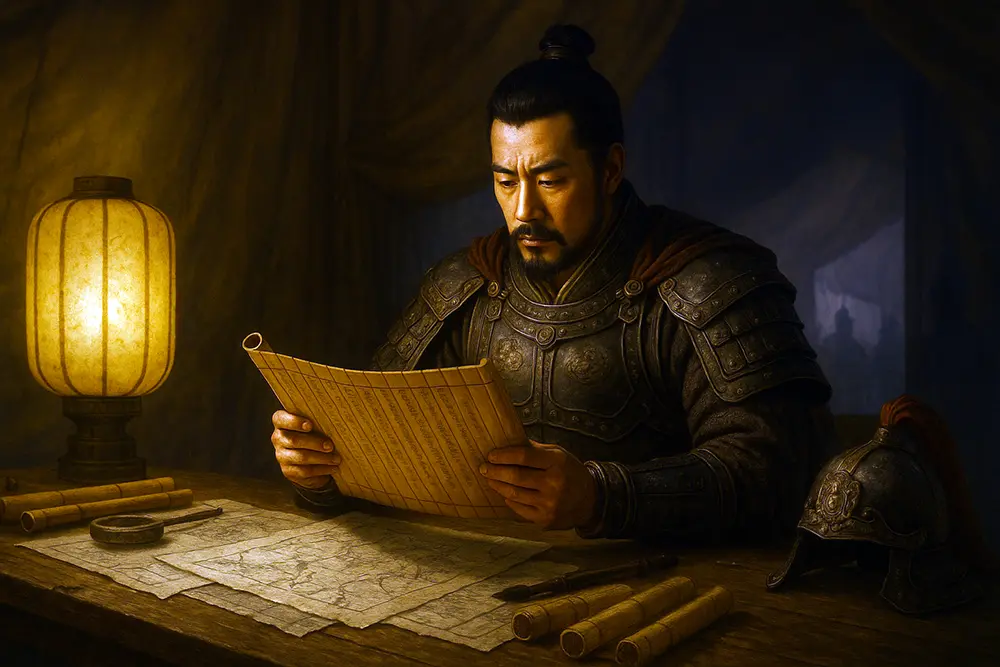
Lü Meng: Scholar in armor
Discover how Lü Meng transformed from a rough soldier into a learned general, capturing Jing Province and reshaping Wu’s destiny in the Three Kingdoms.

Rayden C
September 22, 2025 — 4 minutes read
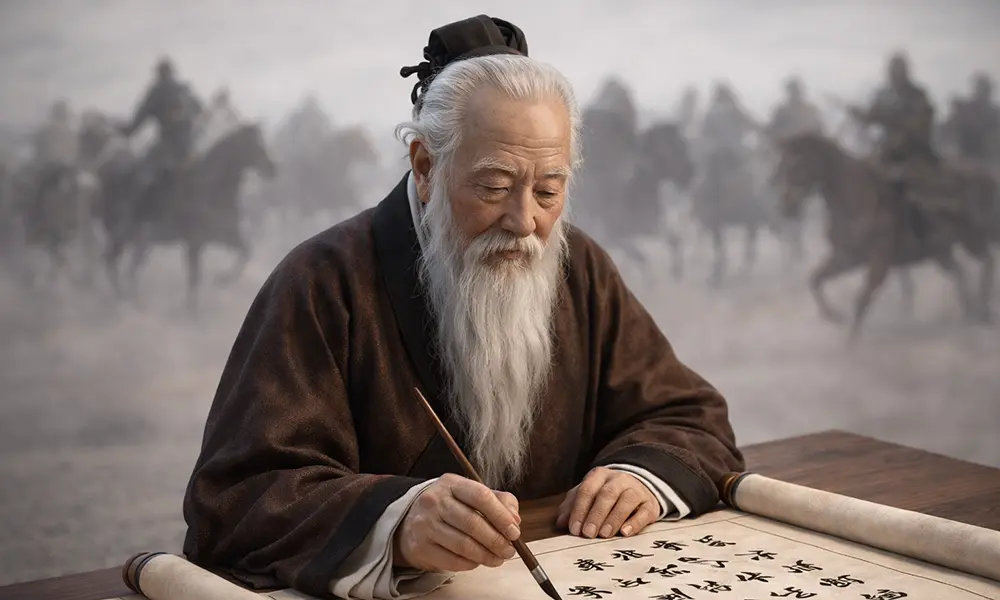
In the lore of the Three Kingdoms, strength and intellect are often painted as opposites. Generals wielded spears; scholars wielded scrolls. Lü Meng shattered that boundary. Once dismissed as an uneducated soldier, he transformed himself into one of Wu’s sharpest minds, a warrior-scholar whose pen proved as decisive as his sword.
From rough fighter to reluctant student
Lü Meng began his career as a young fighter in Sun Quan’s ranks, known more for courage than for cleverness. Early anecdotes describe him as a straightforward man of action, loyal, brave, and utterly unpolished.
But Sun Quan saw potential in him. The young ruler pressed Lü Meng to study, warning that military skill alone would not be enough in a world where strategy and governance mattered as much as force. At first reluctant, Lü Meng eventually threw himself into learning with the same discipline he had shown in battle.
The result was a transformation. Colleagues who once mocked his lack of learning now found themselves outmatched in both debate and strategy. The nickname “Scholar in Armor” was not flattery; it was fact.
The fall of Guan Yu
Lü Meng’s rise culminated in one of the most dramatic episodes of the Three Kingdoms: the downfall of Guan Yu.
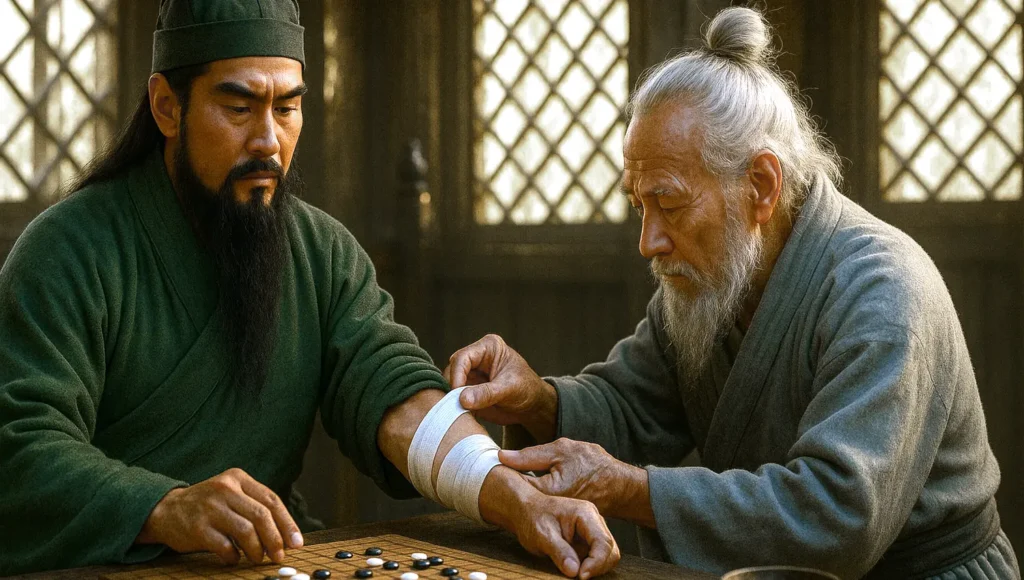
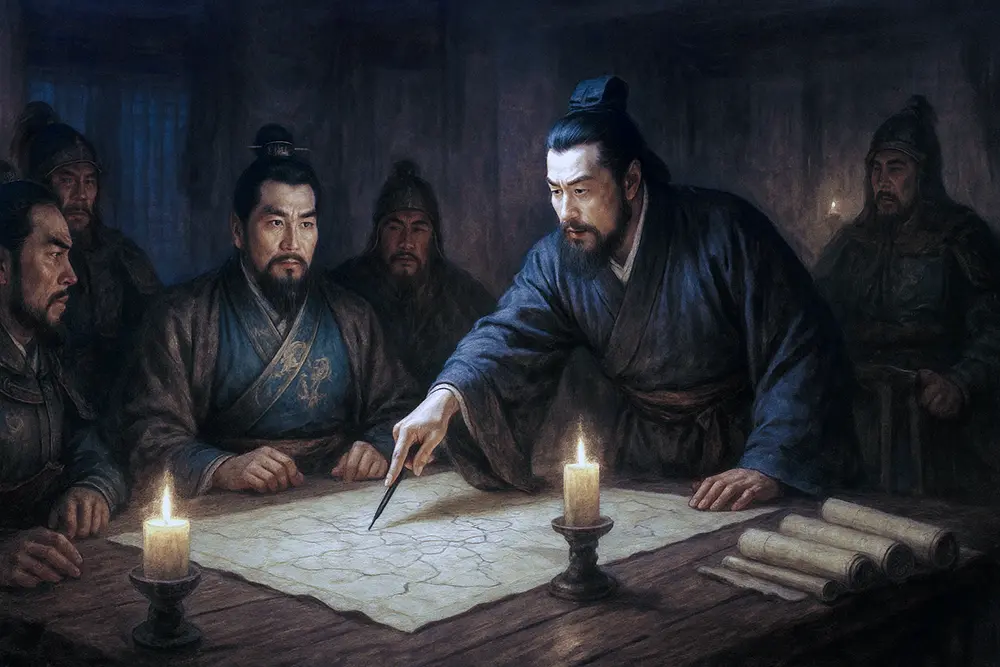
When Guan Yu marched north and threatened Cao Cao’s forces at Fancheng, Lü Meng saw an opening. While Guan Yu was occupied, Lü Meng disguised his own troop movements, slipping into Jing Province and capturing it with minimal bloodshed. This maneuver cut Guan Yu off from his base of support, sealing his fate.
It was a masterclass in strategic deception, combining cunning planning with precise execution. Guan Yu, revered as one of the mightiest generals of his age, fell not to brute strength but to Lü Meng’s calculated intellect.
The human cost of brilliance
Yet victory came at a cost. Guan Yu’s death fractured the alliance between Wu and Shu, turning former partners into bitter rivals. Many later condemned Lü Meng for treachery, portraying his move as opportunistic betrayal.
Wu, however, saw it differently. For Sun Quan, Jing Province was too critical to leave in Shu’s hands, and Guan Yu’s arrogance had already strained relations. Lü Meng’s bold plan secured Wu’s position on the Yangtze and proved that brains and discipline could shift the balance of power as much as armies.
Still, the weight of the conflict and perhaps guilt over the bloodshed, seemed to mark Lü Meng’s final years. He fell gravely ill not long after the campaign, dying young despite his triumphs.
A legacy of transformation
Lü Meng’s story endures because it breaks the mold. He was not born a prodigy like Zhuge Liang, nor was he the son of a great house. He remade himself. His commitment to study turned him from a rough fighter into a refined strategist, proving that intellect is not inherited but cultivated.
In modern terms, Lü Meng’s life reads like a case study in personal reinvention:
- Continuous learning pays off. His embrace of study late in his career turned him from competent to exceptional.
- Strategy trumps strength. The capture of Jing Province showed that clever planning can undo even the fiercest opponent.
- Opportunity requires courage. Lü Meng’s willingness to act while Guan Yu was away demonstrates that decisive timing matters more than raw power.
- Legacy is complicated. To Shu, Lü Meng was a traitor; to Wu, a savior. Leadership often carries that duality.
Why remember Lü Meng?
Because he embodies the possibility of change. In a world where men were often boxed into roles, scholar or warrior, ruler or subject, Lü Meng refused the division. He became both.
His story reminds us that greatness is not about where you start but how willing you are to grow. Lü Meng proved that a rough soldier could rise to match legends, not by abandoning his armor but by pairing it with wisdom.
Discover our recent stories


 Reflections
Cao Pi: Leading in the shadow of Cao Cao