Chronicles
Zhang Fei: More than just a hot temper
Zhang Fei is remembered as fiery and reckless, but was he more than that? Revisit his story and uncover the man behind the myth.

Rayden C
September 29, 2025 — 4 minutes read
The stereotype of the roaring warrior
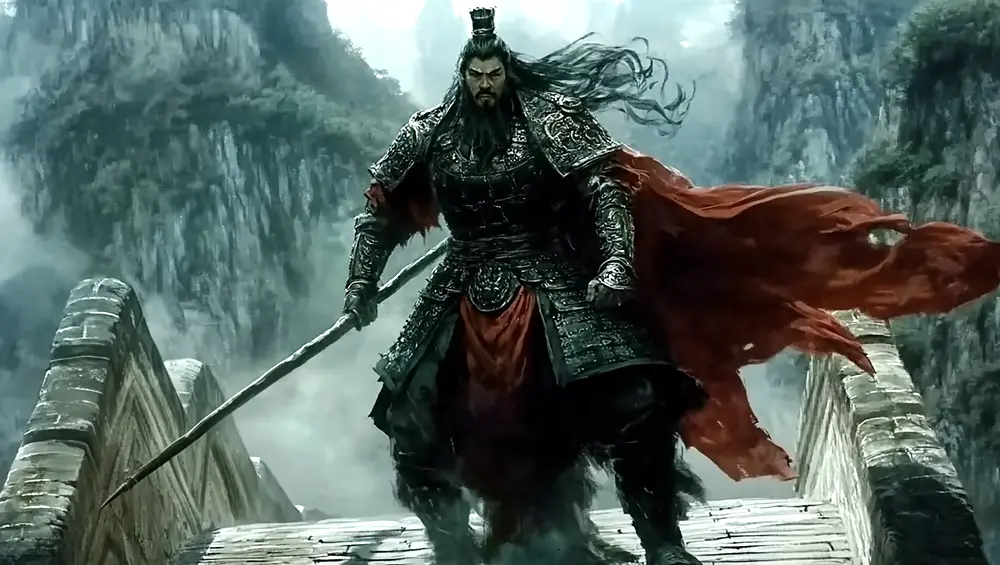
In Romance of the Three Kingdoms, Zhang Fei is painted as the archetype of the brash, loud-mouthed warrior, a man who could scare entire armies by bellowing across the battlefield. His introduction in the novel often comes with imagery of a bull-like figure, quick to anger and quicker to draw his spear. This has led to the popular perception of Zhang Fei as nothing more than Liu Bei’s muscle, the “third brother” who relied on physical strength and intimidation rather than intellect. Yet, history tells a more nuanced story. While Zhang Fei was undoubtedly fierce and occasionally hot-headed, the Records of the Three Kingdoms (Sanguozhi) by Chen Shou describes him as capable of military discipline and governance when the situation demanded. His reputation for ferocity was not just for show, it was a deliberate part of his battlefield strategy. He understood the value of psychological warfare long before the term existed, using his voice, appearance, and presence to unsettle opponents before blades even crossed.
The discipline behind the chaos
One of Zhang Fei’s most famous historical feats was his stand at Changban in 208 CE, where he held off pursuing forces of Cao Cao to allow Liu Bei’s army and civilians to escape. The romanticized version emphasizes his roar on the bridge, terrifying enemy troops into retreat. While the drama makes for great literature, the reality was that Zhang Fei had destroyed the planks of the bridge and stationed archers strategically. The “roar” was only the finishing touch, the setup was pure military cunning.
Contrary to the idea of Zhang Fei as uncontrollable, historical accounts also credit him with enforcing strict discipline. In territories under his control, he implemented clear laws and treated civilians with respect, a stark contrast to the undisciplined behaviour of many soldiers at the time. The Sanguozhi notes that local people in his command areas felt secure, which suggests that Zhang Fei’s leadership went beyond brute force. His harshness, when applied, was often directed at maintaining order, not indulging in reckless violence.
Flaws that couldn’t be ignored
However, it would be dishonest to completely discard the accounts of Zhang Fei’s temper. His career was punctuated by moments where his anger led to tragic consequences. Several historical notes mention that his severity toward subordinates could turn cruel, and this ultimately played a role in his death, assassinated by his own officers in 221 CE just before Liu Bei’s campaign to avenge Guan Yu. This was not simply bad luck; it was the result of a leadership blind spot that he never fully addressed.
Still, even in this flaw, there is complexity. Zhang Fei’s outbursts often came from a place of deep loyalty and high standards rather than malice. He despised betrayal and laziness, and his strict expectations were part of why he was so effective in battle. Unfortunately, without balancing that intensity with empathy, his discipline could tip into alienation, a fatal risk for any leader in a volatile era.
Lessons for modern leaders
Zhang Fei’s life challenges the “one-dimensional warrior” stereotype. He was not just a spear-wielding berserker but a commander who could plan, govern, and protect civilians. He understood the psychological aspects of leadership, leveraging both fear and respect to achieve his goals. His successes from the defence at Changban to his record as a regional governor, show that discipline and charisma can coexist in a single leader.
For today’s leaders, Zhang Fei offers two powerful lessons. First, perception can be a tool: his fierce image was as much a tactical asset as his actual combat skills. Second, discipline must be balanced with humanity: high standards can inspire excellence, but unchecked severity can erode loyalty. Ultimately, Zhang Fei’s legacy reminds us that even the fiercest warrior is more than just his temper and that leadership is as much about control as it is about courage.
Discover our recent stories


 Reflections
Cao Pi: Leading in the shadow of Cao Cao