Chronicles
Why Cao Cao was both a hero and a villain
Uncover the dual nature of Cao Cao, a brilliant leader yet ruthless villain, and learn what his moral ambiguity reveals about power and politics.

Rayden C
September 1, 2025 — 5 minutes read
The complexity of a man in a time of chaos
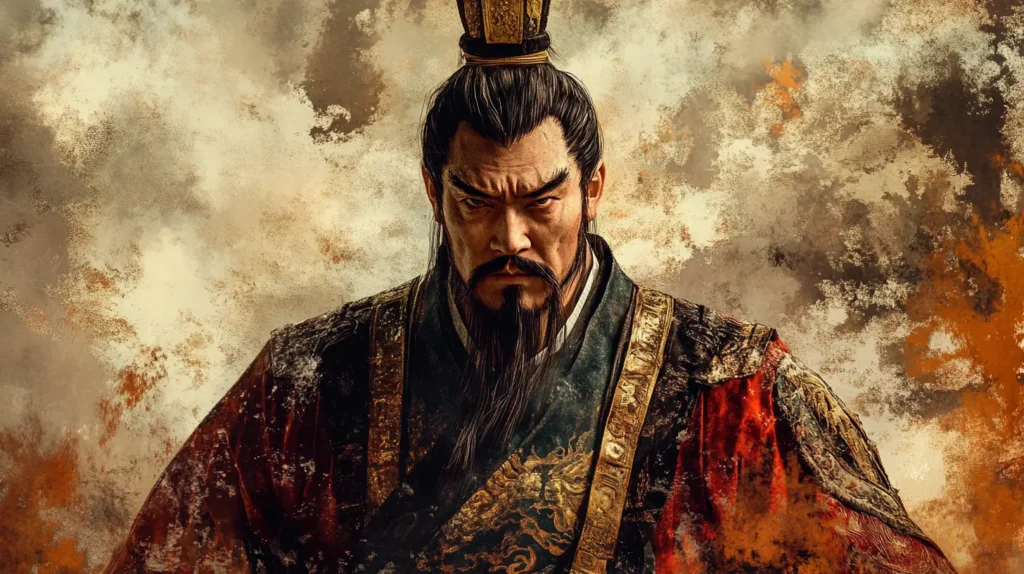
When most people first hear of Cao Cao, they’re told to fear him. In the Romance of the Three Kingdoms, he is introduced with the chilling phrase: “I would rather betray the world than let the world betray me.” It’s an opening line that makes him sound like a cold-blooded opportunist, the perfect villain for a sweeping historical drama. But history, as it turns out, rarely deals in such absolutes.
Cao Cao lived in a time when the Han Dynasty’s political fabric was unravelling. Local governors held more power than the emperor, warlords carved up territory, and loyalty was often a luxury one could not afford. In this environment, Cao Cao’s ruthless decisiveness was not so much a personal quirk as it was a survival mechanism. His rise wasn’t purely about ambition, it was also about navigating a world where hesitation could mean death.
This duality is what makes him so fascinating. For every act of cruelty attributed to him, there is a counterpoint, an instance of clever governance, humane policy, or inspired military leadership. The truth is, Cao Cao’s reputation as both a hero and a villain is not the result of contradiction but of context. The same qualities that made him feared also made him respected.
The hero: A visionary leader and skilled administrator
Strip away the propaganda of rival states, and a different image of Cao Cao emerges, that of a man who brought order to chaos. He reorganized agricultural systems, introducing the “tuntian” policy, which encouraged soldiers and civilians to farm land together, providing food security for his armies and the people under his rule. At a time when famine was as dangerous as enemy troops, this was revolutionary.
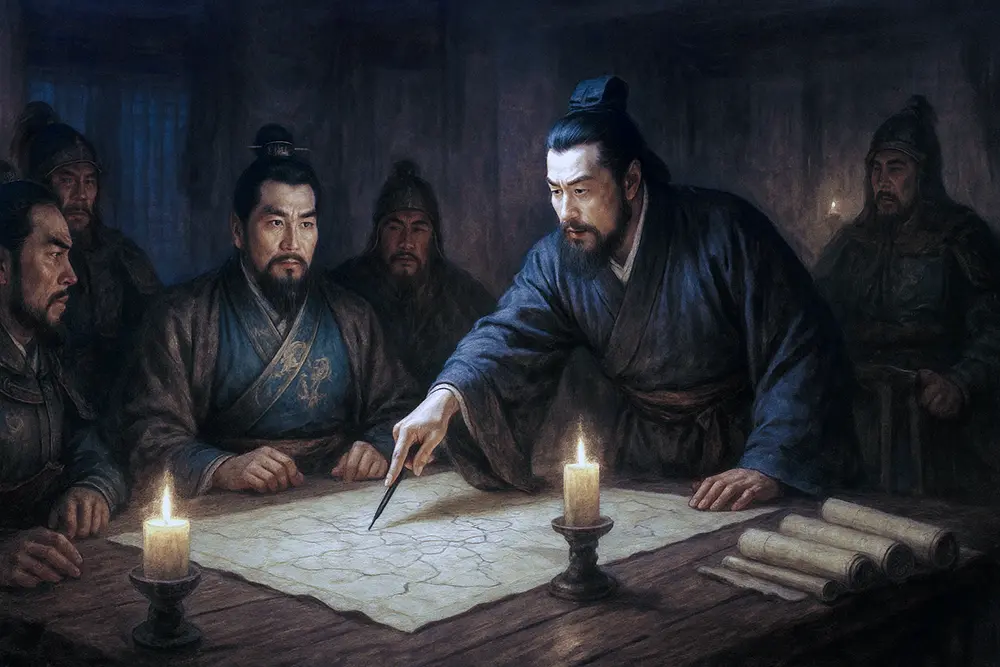
Cao Cao also valued merit over noble birth. In an era when family name dictated one’s career, he was willing to promote talented individuals from humble backgrounds. Many of his top generals and advisors, such as Xu Chu, Xun Yu, and Guo Jia, came from outside the traditional aristocracy. For ambitious but low-born men, serving under Cao Cao meant a rare chance to shine. His military genius was undeniable. Whether it was the lightning-fast strike against Lü Bu or the calculated retreat from Red Cliff after a devastating defeat, Cao Cao had a knack for making the best of a bad situation. To his followers, he was the man who could keep them alive, fed, and victorious, a saviour in a time when saviours were in short supply.
The villain: Ruthlessness and self-interest
Of course, the portrait isn’t all noble deeds and enlightened policies. Cao Cao’s ambition often came at the expense of others, and his pursuit of power left a trail of blood. His decision to execute Lü Boshe and his entire family, ostensibly to prevent betrayal, remains one of the most infamous examples of his cold pragmatism. Critics see it as proof that his motto about betrayal wasn’t just bluster; it was a governing principle.
His consolidation of power also meant the gradual erosion of the Han emperor’s authority. While he never outright declared himself emperor, many saw him as the de facto ruler, using the throne as a political shield while directing policy and military campaigns himself. To his enemies, and to later Confucian historians, this was treachery disguised as loyalty.
Then there’s the matter of propaganda. Cao Cao was a master of controlling the narrative, portraying himself as the protector of the Han while vilifying his opponents. Yet history is written by the victors, and in this case, Cao Cao’s successors did not get the final say. His image was further twisted by the Romance of the Three Kingdoms, a Ming-era novel that favoured his rivals, Liu Bei and Zhuge Liang.
Lessons from a morally ambiguous legacy
Cao Cao’s life forces us to confront an uncomfortable truth: great leaders are often morally complex. The qualities that make them effective, decisiveness, ambition, and strategic cunning, are the same ones that can make them dangerous. In leadership, morality is rarely absolute; it shifts depending on perspective, circumstance, and survival needs.
For modern readers, Cao Cao’s story is a reminder that leadership often requires balancing ethics with pragmatism. In business, politics, or community leadership, a decision that seems ruthless in the short term may ensure long-term stability, but it also risks alienating allies and staining one’s legacy. The question isn’t just whether an action is right or wrong, but whether it is necessary, and who gets to decide.
In the end, perhaps the most fitting way to remember Cao Cao is as neither hero nor villain, but as a man who embodied both. His story challenges us to resist easy moral labels and to understand that history’s most enduring figures are rarely the simplest ones. Cao Cao’s legacy endures precisely because it forces us to think, and to admit that in times of chaos, the line between virtue and vice is perilously thin.
Discover our recent stories


 Reflections
Cao Pi: Leading in the shadow of Cao Cao